



Obesity, defined by the World Health Organization as a body mass index (BMI) 30 kg/m2, is a pervasive medical condition correlated with an increased risk of chronic conditions such as cardiovascular, metabolic, endocrine, and kidney disease.1
The prevalence of obesity among individuals 20 years and older increased from 34.7% in 1999 to 42.5% in 2022 and is forecasted to be 46.9% in 2035.2
According to America’s Health Rankings, using 2024 CDC Behavioral Risk Factor Surveillance System data, 31.5% of Washington adults have a BMI consistent with obesity, and this increases to 35% in non-metropolitan areas.3
Despite the rise in obesity and concomitant complications, less than 2% of people living with obesity received any form of obesity treatment.4
Healthy lifestyle supports, including nutrition and physical activity strategies, are foundational components of obesity prevention and treatment, even when pharmacotherapy or metabolic and bariatric surgery are also part of the treatment plan. Healthcare professionals play a central role in helping patients with obesity to identify the need for behavioral change and set manageable goals to support sustainable change. As a healthcare professional, you may provide patients with counseling, refer them for an intensive lifestyle intervention, prescribe or dispense medications, and monitor their outcomes.5
Patients living with obesity may present with chronic conditions that are related to their obesity, but they may not identify weight as their chief concern or may not be ready to discuss it. In fact, over 40% of people with overweight (BMI of 25.0–29.9 kg/m2) and nearly 10% of those with obesity may not perceive their body size as higher weight. When clinically appropriate, healthcare professionals can respectfully ask permission to discuss weight, obesity, and their relationship with comorbid health conditions.1, 5
Pathophysiology
Obesity is a complex, multifactorial chronic disease that results from the interaction of both modifiable and nonmodifiable factors rather than simply individual choice.
-
Nonmodifiable or less modifiable contributors
Nonmodifiable or less modifiable contributors include:
- Genetic predisposition.
- Epigenetic influences.
- Prenatal and early-life exposures.
- Neuroendocrine regulation of appetite and metabolism.
- Certain medical conditions.
- Some medications that promote weight gain.
-
Environmental and socioeconomic factors
Environmental and socioeconomic factors also influence obesity risk and are often only partially under an individual's control such as:
- Food access.
- Neighborhood characteristics.
- Income.
- Education.
- Exposure to chronic stress.
-
Modifiable contributors
Modifiable contributors may include:
- Dietary patterns.
- Physical activity.
- Sleep habits.
- Stress management.
- Engagement in evidence-based treatment.
However, these behaviors occur within biological, social, and environmental contexts that can facilitate or hinder healthy choices.
Therefore, current evidence supports viewing obesity as a chronic disease driven by the interplay of genetic, biological, behavioral, environmental, and social determinants, rather than as a condition caused by lack of willpower or personal responsibility alone (see conceptual model below).6–9
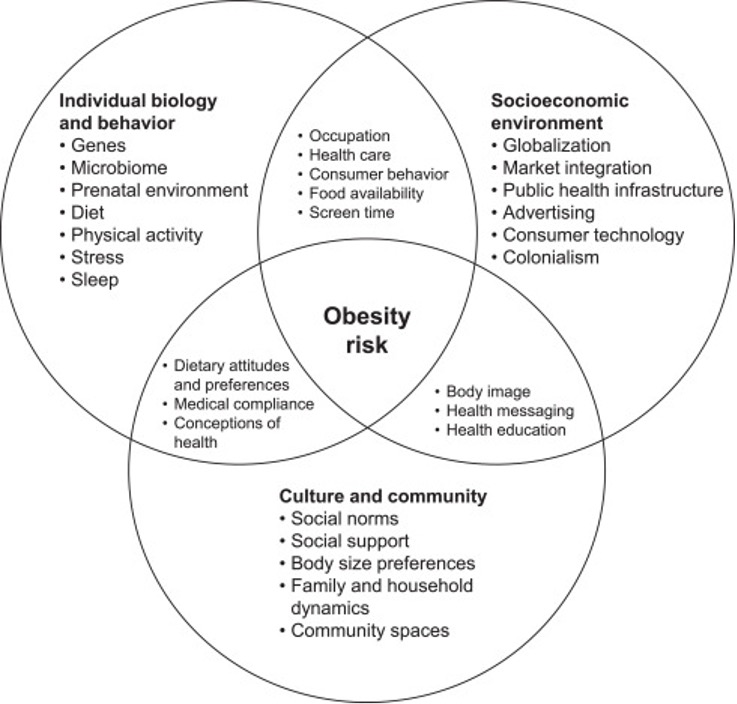
- Lim Y, Haq N, Boster J. Obesity and Comorbid Conditions. StatPearls. Treasure Island (FL): StatPearls Publishing. StatPearls Publishing LLC.; 2026.
- DeCleene NK, Kahn E, Yuan CW, Gakidou E, Mokdad AH, Murray CJL, et al. U.S. State-Level Prevalence of Adult Obesity by Race and Ethnicity From 1990 to 2022 and Forecasted to 2035. JAMA. 2026;335(11):975-85.
- Obesity in Washington. Foundation UH 2024;Pages. Accessed at America’s Health Rankings on August 5 2026.
- Podolsky MI, Raquib R, Hempstead K, Stokes AC. Trends in Obesity Care Among U.S. Adults, 2010–2021. Med Care. 2025;63(3):234–40.
- Obesity Management Learning Hub. American College of Physicians. 2026 Accessed on July 8 2026.
- Masood B, Moorthy M. Causes of obesity: a review. Clin Med (Lond). 2023;23(4):284–91.
- Busebee B, Ghusn W, Cifuentes L, Acosta A. Obesity: A Review of Pathophysiology and Classification. Mayo Clinic Proceedings. 2023;98(12):1842–1857.
- Singh V, Sun J, Cheng S, Kwan AC, Velazquez A. Obesity as a Chronic Disease: A Narrative Review of Evolving Definitions, Management Strategies, and Cardiometabolic Prioritization. Adv Ther. 2025 Nov;42(11):5341–5364.
- Dancause KN, Olszowy KM. Identifying actionable lifestyle risk factors for obesity research and intervention: Challenges and opportunities for Pacific Island health researchers. The Lancet Regional Health—Western Pacific. 2020;4.
- Bannuru RR. Weight stigma and bias: standards of care in overweight and obesity—2025. BMJ Open Diabetes Research & Care. 2025;13(Suppl 1):e004962.
- Brown A, Flint SW, Batterham RL. Pervasiveness, impact and implications of weight stigma. eClinicalMedicine. 2022;47:101408.
- Phelan SM, Burgess DJ, Yeazel MW, Hellerstedt WL, Griffin JM, van Ryn M. Impact of weight bias and stigma on quality of care and outcomes for patients with obesity. Obes Rev. 2015;16(4):319–26.
- Liang JW, Buonpane C, Wang S, Salles A. Implicit and explicit weight bias among healthcare professionals. International Journal of Obesity. 2025;49(11):2372–7.
- Alberga AS, Edache IY, Forhan M, Russell-Mayhew S. Weight bias and health care utilization: a scoping review. Prim Health Care Res Dev. 2019;20:e116.
- Ryan L, Coyne R, Heary C, Birney S, Crotty M, Dunne R, et al. Weight stigma experienced by patients with obesity in healthcare settings: A qualitative evidence synthesis. Obes Rev. 2023;24(10):e13606.
- Moore CH, Oliver TL, Randolph J, Dowdell EB. Interventions for reducing weight bias in healthcare providers: An interprofessional systematic review and meta-analysis. Clin Obes. 2022;12(6):e12545.
- Sutin AR, Stephan Y, Terracciano A. Weight Discrimination and Risk of Mortality. Psychol Sci. 2015;26(11):1803-11.
- Prunty A, Hahn A, O’Shea A, Edmonds S, Clark MK. Associations among enacted weight stigma, weight self-stigma, and multiple physical health outcomes, healthcare utilization, and selected health behaviors. Int J Obes (Lond). 2023;47(1):33-8.
- Albury C, Strain WD, Brocq SL, Logue J, Lloyd C, Tahrani A. The importance of language in engagement between health-care professionals and people living with obesity: a joint consensus statement. The Lancet Diabetes & Endocrinology. 2020;8(5):447–55.