

Pre-assessment for principles of cardiac electrophysiology
To understand the mechanism of action of antiarrhythmic drugs, it is necessary to understand cardiac electrophysiology and the pathophysiology of arrhythmogenesis. Please take the following pre-assessment to gauge your understanding of principles of cardiac electrophysiology as it relates to pharmacology. If you miss two or more questions, you are strongly encouraged to review cardiac electrophysiology and the pathophysiology of arrhythmogenesis from […]
Drugs for dysrhythmias
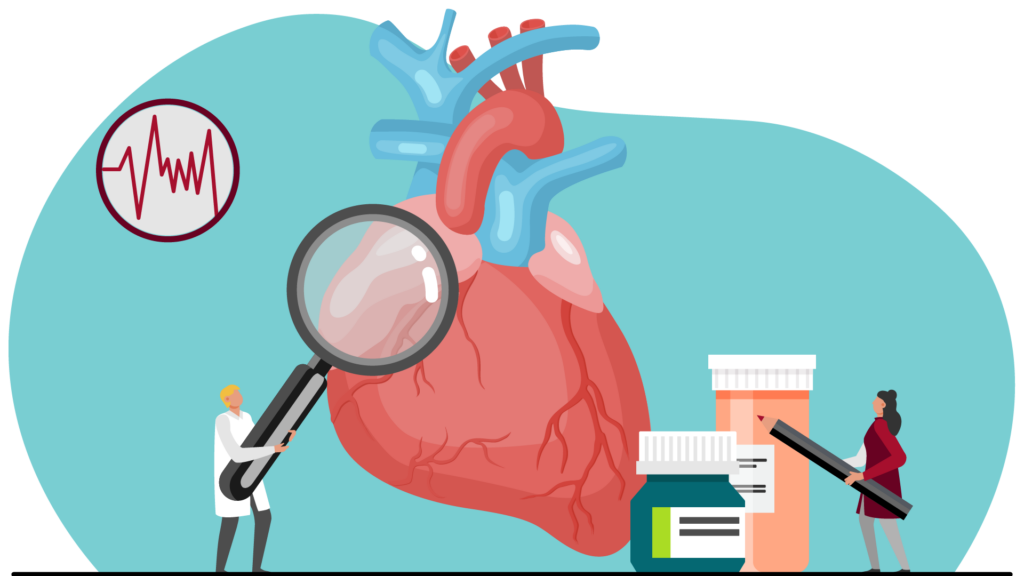
Learning goals Describe the mechanism of action (including impact on ion channel(s), electrophysiologic action potential, and electrocardiogram) of antiarrhythmic drugs. Identify generic drug names and classify them according to their Singh Vaughan–Williams cardiac antiarrhythmic class. Describe adverse effects and contraindications of antiarrhythmic drugs. Describe drug interactions of antiarrhythmic drugs. Hello and welcome! This module is […]
Pharmacology: Introduction to antimicrobial therapy
High-yield summary Learning goals Understand five mechanisms of antibiotic action Differentiate empiric vs. directed therapy Recognize bacterial resistance mechanisms Apply PK/PD principles: bacteriostatic vs. bactericidal, time vs. concentration dependence Mechanisms of action Cell Wall Synthesis Inhibition: Penicillins, Cephalosporins, Carbapenems, Vancomycin. Protein Synthesis Inhibition: Aminoglycosides (30S), Macrolides, Clindamycin, Tetracyclines (50S). Cell Membrane Disruption: Daptomycin, Polymyxins. […]
Bugs and Drugs review: March 25, 2025
Transcript of session 100:01:01.050 –> 00:01:03.019Skye McKennon (she/her): Hi, Connie and Joanna. 200:02:09.960 –> 00:02:12.609SMED 175 Podium: Dr. Mckinnon. Can you hear me? 300:02:12.610 –> 00:02:14.210Skye McKennon (she/her): Now I can. Hi! 400:02:14.514 –> 00:02:24.850SMED 175 Podium: I had to turn on my mic. Do you want to take over screen sharing for your slides, […]
Microbiology and Infectious Disease reviews

Click here for more review materials
Autonomic Receptors
Structural family Functional families Receptor Physiological ligands Effectors, Transducers, Major functions G Protein Coupled Receptors (GPCR) Muscarinic receptors M1 Acetylcholine Gq-coupled Increased phospholipase C increased IP3, diacylglycerol, cytoplasmic calcium M2 Acetylcholine Gi-coupled Decreased adenylyl cyclase decreased cAMP M3 Acetylcholine Gq-coupled Increased phospholipase C increased IP3, diacylglycerol, cytoplasmic calcium Alpha-adrenergic receptors Alpha1 (α1) Epinephrine, norepinephrine Gq-coupled Increased […]
The Effects of the Autonomic Nervous System on Organ Systems
Sympathetic Parasympathetic Organ Target Actiona Receptorb Actiona Receptorb Eye Iris Radial muscle Contracts α1 — — Circular muscle — — Contracts M3 Ciliary muscle [Relaxes] β Contracts M3 Heart Sinoatrial node Accelerates β1, β2 Decelerates M2 Ectopic pacemakers Accelerates β1, β2 — — Contractility Increases β1, β2 Decreases (atria) [M2] Blood vessels Skin, splanchnic vessels […]
Cellular Receptors of Relevance to Therapeutics
This table provides a summary of the various types of cellular receptors that are drug targets. Classes Subclasses or families Physiological ligands Transducers, principal effects, or ions G protein-coupled receptors (GPCRs)a Adhesion Frizzled Glutamate Rhodopsin Secretin Very large number of endocrine and paracrine factors, but other types of ligands as well G proteins Gs: Adenylyl […]
Pharmacology resources for board preparation
Pharmacology summary sheets and USMLE study guides Your pharmacology faculty developed Summary Sheets and USMLE Study Guides for each pharmacology session. The materials can be accessed in E.Flo MD in the FMS 513 session titled High-yield Review Pharmacology on Monday, March 13, 2026. Selected high-yield pharmacology topics Autonomics We created enhanced autonomics pharmacology coverage this […]