



Dietary treatment principles
Fundamental advice for all patients includes consuming healthful nutrient-dense foods, cooking at home when possible, and reducing consumption of packaged and ultra-processed foods (UPFs). Beyond these basics, recommendations should be individualized and established through shared decision making to improve long-term adherence. A handful of evidence-based dietary interventions produce notable improvements in short-term weight loss, but long-term weight loss requires sustained lifestyle change in such a manner that the patient does not feel deprived or overly restricted.
A nutrition approach is most likely to be effective when the patient can sustain it over time without feeling deprived or overly restricted.
Balance caloric restriction with food quality
The most common nutrition intervention for weight loss has historically been caloric restriction. However, sustainable long-term weight loss does not end with simple calorie counting, as caloric restriction may result in dysregulation of neurobiological pathways. The key to establishing a nutrition intervention for weight loss and for improvements in cardiometabolic disease is the quality of food consumed and emphasis on overall health (rather than weight loss). Calorie goals are helpful but should be achieved through nutritious dietary choices.
Caloric intake for weight loss
Personalized caloric intake targets for weight loss are regularly used. For an individualized calorie goal, use a validated equation, such as the Mifflin-St. Jeor, to estimate basal metabolic rate and provide a starting point for daily caloric needs. After considering an activity factor or level, reduce by 500–1,000 kcal/d to establish weight loss.
Access an online calculator here.
Food quality as the primary focus
The carbohydrate-insulin model is another teaching tool that may be beneficial for improving weight. This model attributes the development of the dysregulated pathophysiology related to obesity to the overconsumption of ultra-processed carbohydrates, which stimulates insulin secretion and calorie storage in adipose tissues. A lack of available calories for other metabolic processes leads to further intake of food, and ultimately, excess body weight. In order to disrupt this cycle, the primary focus of a dietary intervention should be on limiting or eliminating the consumption of ultra-processed foods from all sources and not caloric reduction.
Promote nutritious dietary choices
Most dietary interventions have one thing in common: The quality of the food supersedes the quantity. We live in an obesogenic environment; food is often continuously accessible, and nonperishable foods often cost less than perishable and less-processed food. Food swamps with a lack of fresh food options can promote increased consumption of ultra-processed, low-nutrient foods. Countering this obesogenic environment requires refocusing attention to nutrient-dense foods within and across food groups, especially vegetables, fruits, whole grains, minimally processed dairy products, lean meats (e.g., fish, poultry without skin), and plant-based proteins (lentils, legumes, beans, nuts, seeds, whole soy foods, quinoa, buckwheat, seitan). These recommendations are helpful in not only weight management but also prevention or improvement of obesity-related chronic diseases.
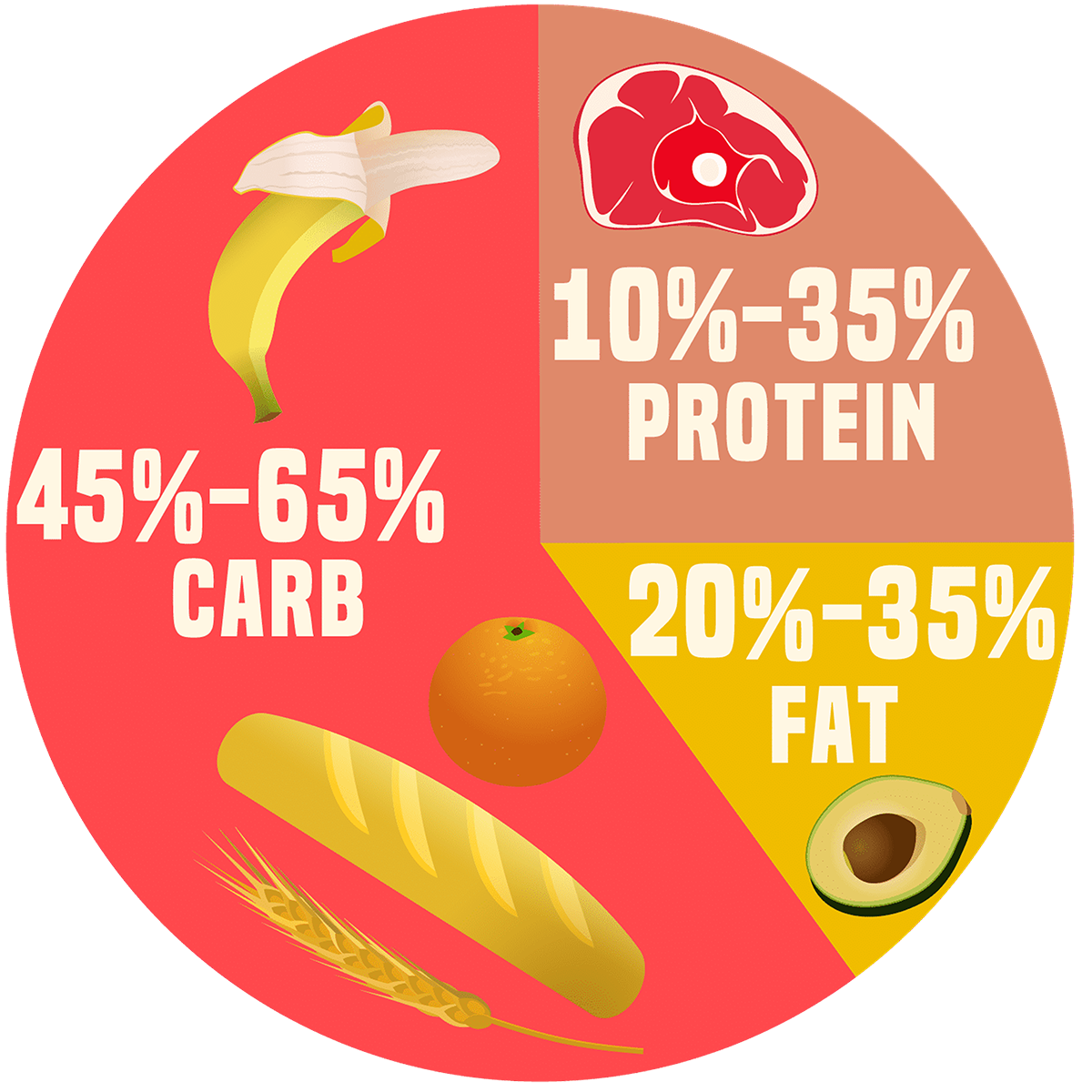
The acceptable macronutrient distribution range (AMDR) includes the following commonly prescribed macronutrient distributions:
- 45% to 65% of total calories from carbohydrates.
- 10% to 35% from protein.
- 20% to 35% from fat, with < 10% of from saturated fat.
Note
Distributions may vary from the AMDR and should be discussed with your patient. For example, dietitians may recommend 60 to 80 grams of protein per day, 64 oz of fluid, and counting calories for a patient after metabolic and bariatric surgery. Consult a registered dietitian nutritionist (RDN) for individualized recommendations.
AMDR is the range of intake for a particular energy source that is associated with reduced risk for chronic disease while providing intake of essential nutrients. If an individual consumes more than the AMDR, there is a potential of increasing the risk for chronic diseases and/or insufficient intake of essential nutrients.
- Vegetables (≥ 3 servings per day).
- Fruits (2 to 3 servings per day).
- Legumes.
- Whole grains (e.g., barley, freekeh, quinoa).
- Heart-healthy fats (e.g., olive oil, nuts, seeds, and avocados).
Omega-3 fatty acids are found in cold-water wild varieties of fish:
- Mackerel.
- Tuna.
- Salmon.
- Sardines.
- Herring.
Saturated fat can be found in:
- Red meat.
- Eggs.
- Dairy.
- Palm oil.
- Ultra-processed foods (UPFs).
- Refined foods.
- Trans fats (partially hydrogenated vegetable oils).
Both sugar-sweetened and artificially sweetened beverages are linked to weight gain and should be limited. Water is generally the beverage of choice.
Team up with a dietitian trained in weight-inclusive care
High-intensity lifestyle interventions have been shown to support clinically meaningful weight loss and cardiometabolic improvements. When possible, refer patients with obesity to an RDN trained in weight-inclusive, or weight-neutral care for medical nutrition therapy (MNT). Dietitians who specialize in weight-inclusive care for obesity management are excellent resources when helping to determine nutrition interventions for patients with obesity, as they are skilled in supporting patients by determining their individualized needs. Dietitians can help identify and address individual patient preferences to guide the patient toward sustainable choices. In so doing, they can help the patient focus on well-being and health to improve obesity-related measures, such as glycemic control, blood pressure, and lipids.
Key Points
Advise all patients
- Consume healthful quality foods.
- Cook at home when possible.
- Reduce packaged and processed foods.
Referral
When possible, refer patients with obesity to a registered dietitian nutritionist (RDN) trained in weight-inclusive care for medical nutrition therapy (MNT). Aim for at least 14 total visits among all clinicians within the first 6 months.
Health goals
For health goals, the quality of the food supersedes the quantity; healthy intake should include:
- Vegetables (≥ 3 servings per day).
- Fruits (2 to 3 servings per day).
- Legumes, grains (e.g., barley, freekeh, quinoa).
- Heart-healthy fats (monounsaturated and polyunsaturated fats, including omega-3s).
- Cold-water fatty fish (omega-3) at least twice per week.
Daily caloric intake
Target an estimated daily calorie intake for weight loss using an individualized goal (i.e., Mifflin-St Jeor equation).
Mindfulness
Mindfulness may help an individual become more aware of their hunger and satiety cues, differentiate emotional and physical cues, and make more conscious food choices.