

The PICO process
P Patient or population I Intervention and treatment C Comparison of one intervention to another O Outcome you anticipate
4. Limbic neurotransmitters and relevant neuroanatomy
Norepinephrine (Noradrenaline) Primary location Concentrated in the hypothalamus, medial limbic system, locus ceruleus (rostral pons), and medulla. Figure 4.1. Norepinephrine pathways of the brain. Functions Modulates alertness, attentiveness, and arousal. Clinical relevance Degeneration of noradrenergic projections from the rostral pons is implicated in neurodegenerative and psychiatric disorders. Current research explores its role in cognitive and […]
3. Long-term potentiation and memory consolidation
Long-Term Potentiation (LTP) is a form of synaptic plasticity where repeated stimulation of a synapse increases its strength, enhancing the likelihood of future activation and contributing to memory formation. LTP mechanisms Glutamate release NMDA receptor activation Calcium influx Retrograde signaling via nitric oxide Leading to increased neurotransmitter release and synaptic responsiveness The LTP process Figure […]
2. Memory function and the neuroanatomy
Key definitions Learning is a neural mechanism by which the organism’s behavior changes because of an experience or stimulus. Memory is the storage mechanism for what is learned. Normally, once memory information is encoded, it is no longer dependent on the hippocampus for retrieval. Figure 2.1. Neuroanatomy of memory formation. Memory involves distinct brain regions […]
1. Neuroanatomy and limbic system functions
Functions regulated by the limbic system Mnemonic Use the acronym HOME. H Homeostasis: Maintains internal physiological balance via hypothalamic connections. O Olfaction: Processes smell through olfactory pathways. M Memory: Especially episodic and spatial memory via the medial temporal lobe. E Emotion: Modulates emotional responses through the Papez circuit and amygdala. Medial temporal lobe: Central to […]
Limbic system and functional neurocircuitry
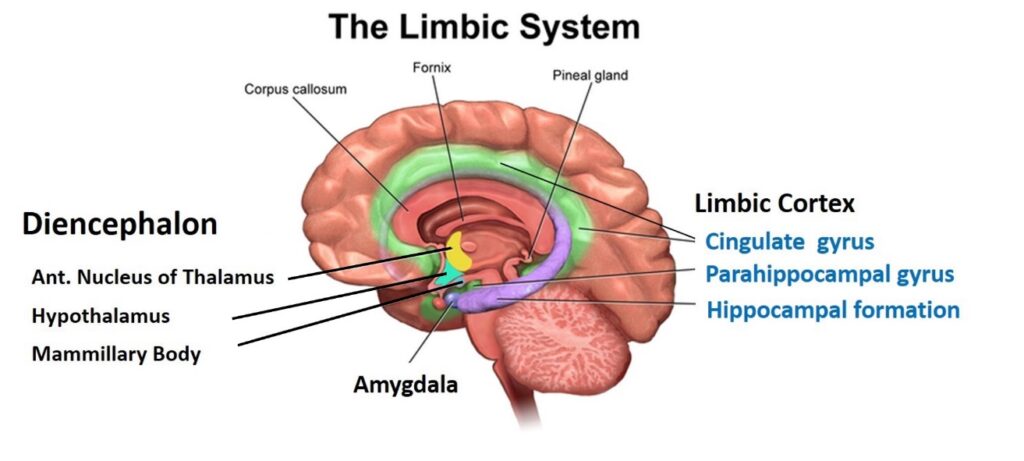
Learning goals Identify and localize the neuroanatomy of the limbic system on diagrams and MRI images Describe how specific brain regions and functional neural pathways are involved in short- and long-term memory Explain how long-term potentiation is associated with establishing memories Describe the functional neural pathways and neurotransmitter circuits associated with neuronal excitation, inhibition, and […]
Parasitology 3: Tissue-invasive parasites
Learning goals Contrast the epidemiology, pathogenesis, clinical features, and diagnosis of cutaneous and visceral leishmaniasis Contrast the epidemiology, pathogenesis, clinical features, and diagnosis of Toxoplasma gondii infection in patients with HIV/AIDS, neonates, and immunocompetent hosts Contrast the epidemiology, pathogenesis, clinical features, and diagnosis of diseases caused by Trichinella, Toxocara (visceral larva migrans), Taenia solium (cysticercosis), […]
Herpes virus
High-yield summary Overview of Herpesviruses (HHV 1–8) Virus Common Name Latency Site Key Diseases HHV-1 HSV-1 Trigeminal ganglia Oral herpes, encephalitis HHV-2 HSV-2 Sacral ganglia Genital herpes, neonatal HSV HHV-3 VZV Dorsal root ganglia Chickenpox, shingles HHV-4 EBV B cells Mono, Burkitt lymphoma, NPC HHV-5 CMV Monocytes Mono-like illness, congenital CMV HHV-6/7 Roseolovirus T […]
Tachyarrhythmias session
Note: If you wish to speed up the viewing process, increase the playback speed to 1.25.
Bradyarrhythmias session
Note: If you wish to speed up the viewing process, increase the playback speed to 1.25.