

Lab 2, Station 5: Spinal Nerves
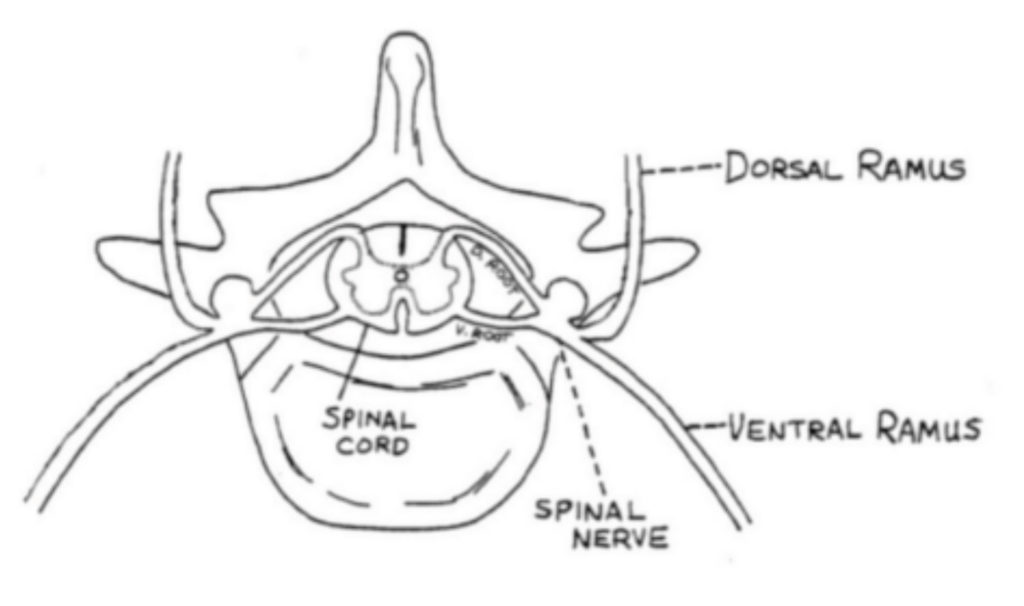
Lab 2 navigation On the whiteboard, draw a cross section of the spinal cord and spinal nerves. You can omit the vertebra in your drawing if you like. Label the following in your drawing: ■Dorsal and ventral horns of gray ■Dorsal and ventral roots ■Dorsal root ganglion ■Spinal nerve ■Dorsal and ventral rami Questions Which […]
Lab 2, Station 6: Muscles of the Back and Posterior Shoulder
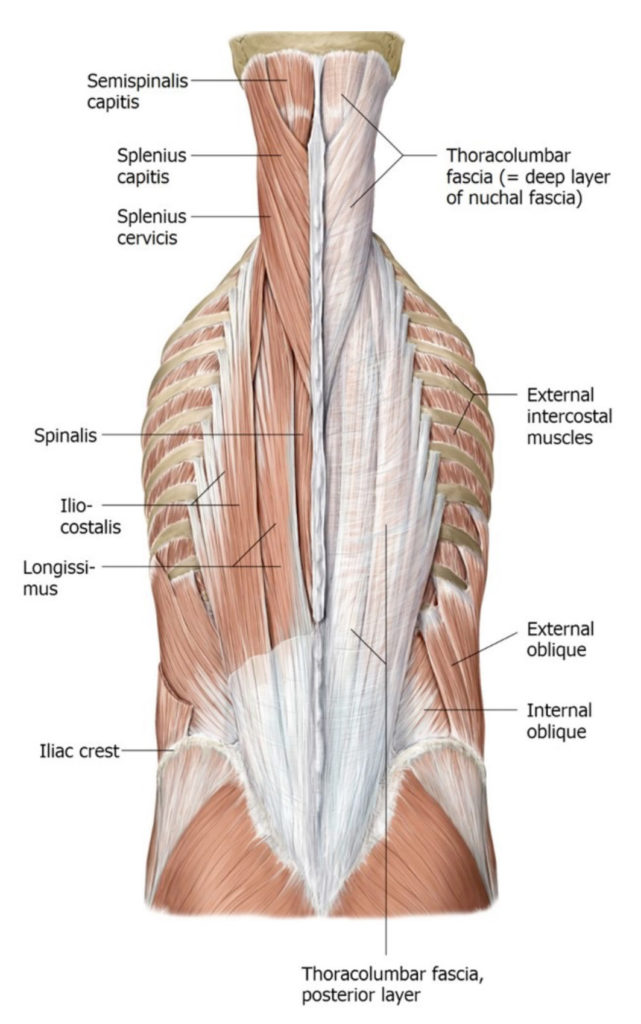
Lab 2 navigation Deep muscles of the back Complete anatomy Deep muscles of the back The prosection is in the prone position: Let’s begin with muscles that extend the spine and head. These are worth knowing about since back pain and muscle spasm are so common. Splenius Muscles Splenius translates to “bandage”—indeed these muscles look […]
Lab 2, Station 3: Imaging of the Vertebral Column
Lab 2 navigation Radiography of the Spine Radiography involves using radiation (x-rays) to provide images of the tissues, organs, and bones, that comprise the human body. To create a radiograph, a patient is positioned so that the part of the body being imaged is located between an x-ray source and an x-ray detector. When the […]
Lab 2, Station 1: Vertebral Column
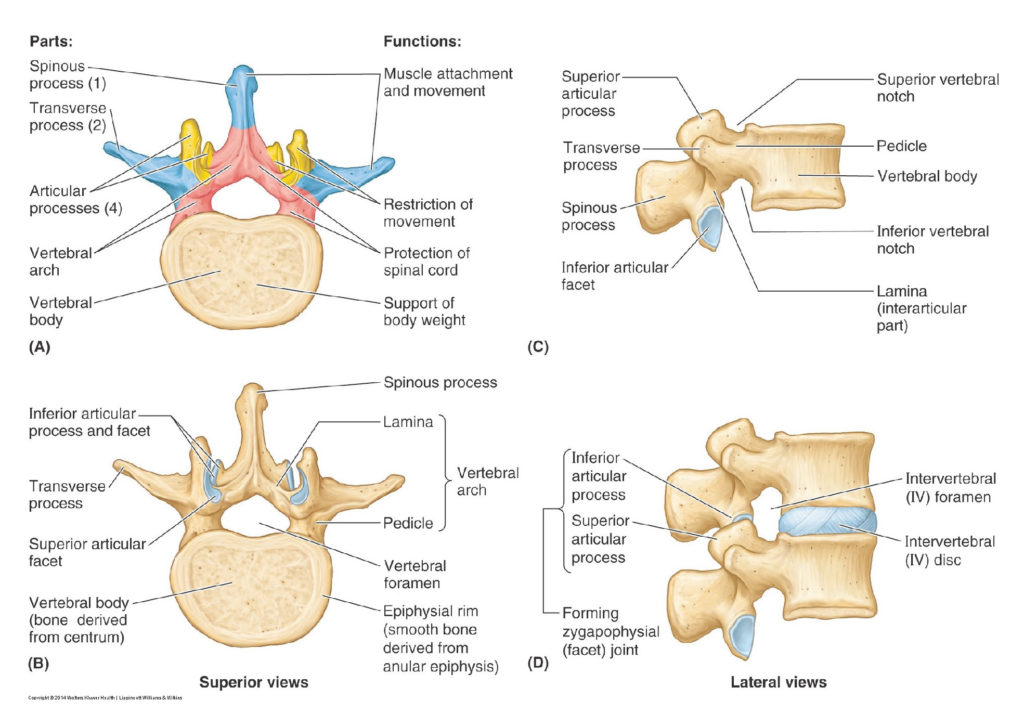
Lab 2 navigation The Vertebral Column as a Whole Complete anatomy Vertebral column Identify these features of the vertebral column: ■Primary curvatures ■Thoracic and sacral Question Primary curvatures = What is the concept? ■Secondary curvatures ■Cervical and lumbar Question Secondary curvatures = When are these acquired? ■Cervical vertebrae (7) ■Thoracic vertebrae (12) ■Lumbar vertebrae […]
Lab 2, Station 2: Vertebral Column 2
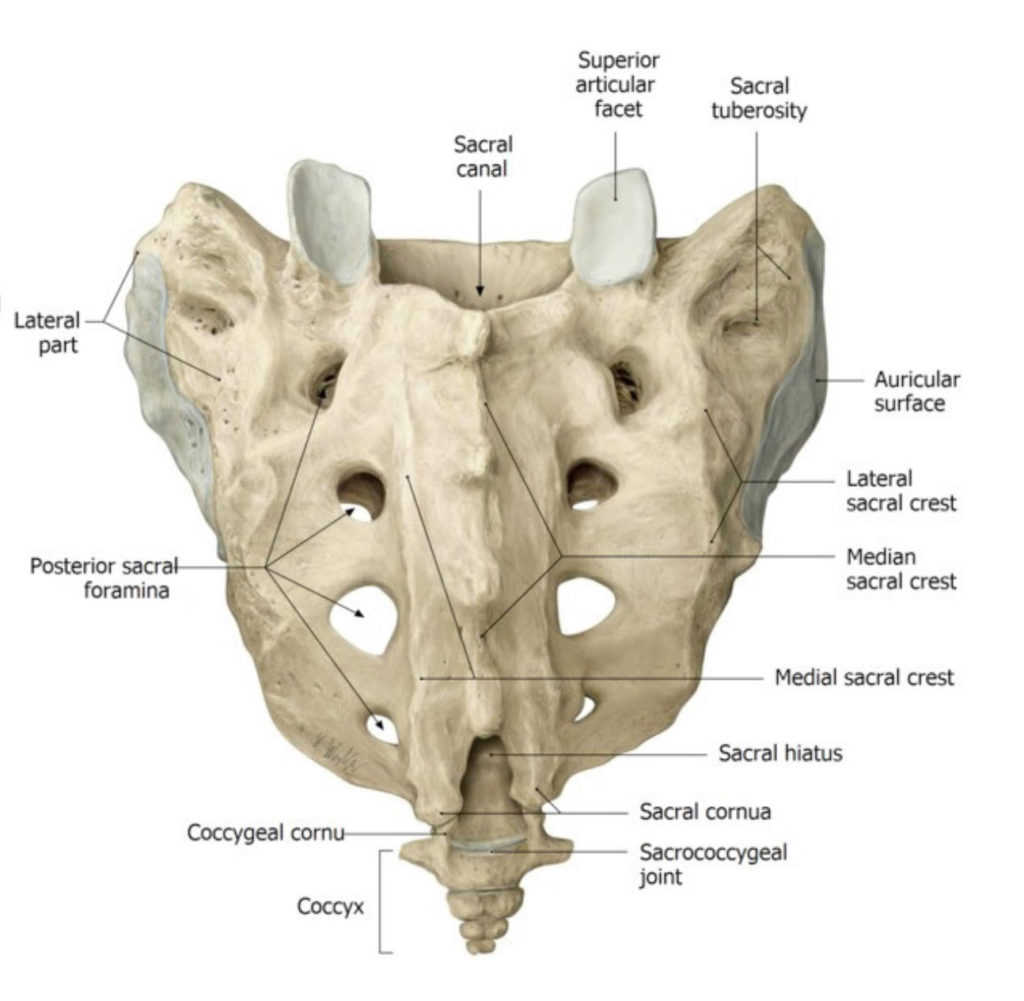
Lab 2 navigation Complete anatomy Sacrum ■Sacrum (5 fused vertebrae) ■Promontory ■Alae (singular is Ala = “wing”). There are two of these, on either side of the promontory ■Anterior and posterior sacral foramina ■Sacral canal ■Sacral hiatus ■Coccyx (4 vertebrae fused into 1-2 pieces) Figure 2.7. Sacrum and coccyx, anterior view. From Gilroy, Atlas of […]
Lab 1: Introduction to Anatomy
Need to log in to view the dissector?
Protected: 2029 Dissector

There is no excerpt because this is a protected post.
Infracolic organs: The intestines
Optional reading Moore’s Clinically Oriented Anatomy, 10th ed., chapter 5: Abdomen, Abdominal viscera. Recall from The peritoneal cavity and mesenteries that the peritoneal cavity is divided into supracolic and infracolic regions, using the transverse colon and its mesentery (transverse mesocolon) as the borderline. In Organs in the supracolic region, the supracolic organs were described. In […]
Perineum
Optional Reading Clinically Oriented Anatomy, 9th ed., Perineum section. The perineum is the inferior-most region of the trunk, located between the thighs and buttocks. In the anatomic position the perineum is partially hidden because the thighs are together. When the thighs are abducted, the perineum has a diamond shape. Due to the forward tilt of […]
Development of genital organs (internal and external genitalia)
Optional Reading The Developing Human: Clinically Oriented Embryology, 12th ed., chapter 12, Development of genital system section through Anomalies of uterine tubes, uterus, and vagina. The adult organs that will be discussed in this chapter are the gonads and the accessory sex organs. Testicular Based Ovo-uterine Based In the phenotypic male, the gonad is the […]