

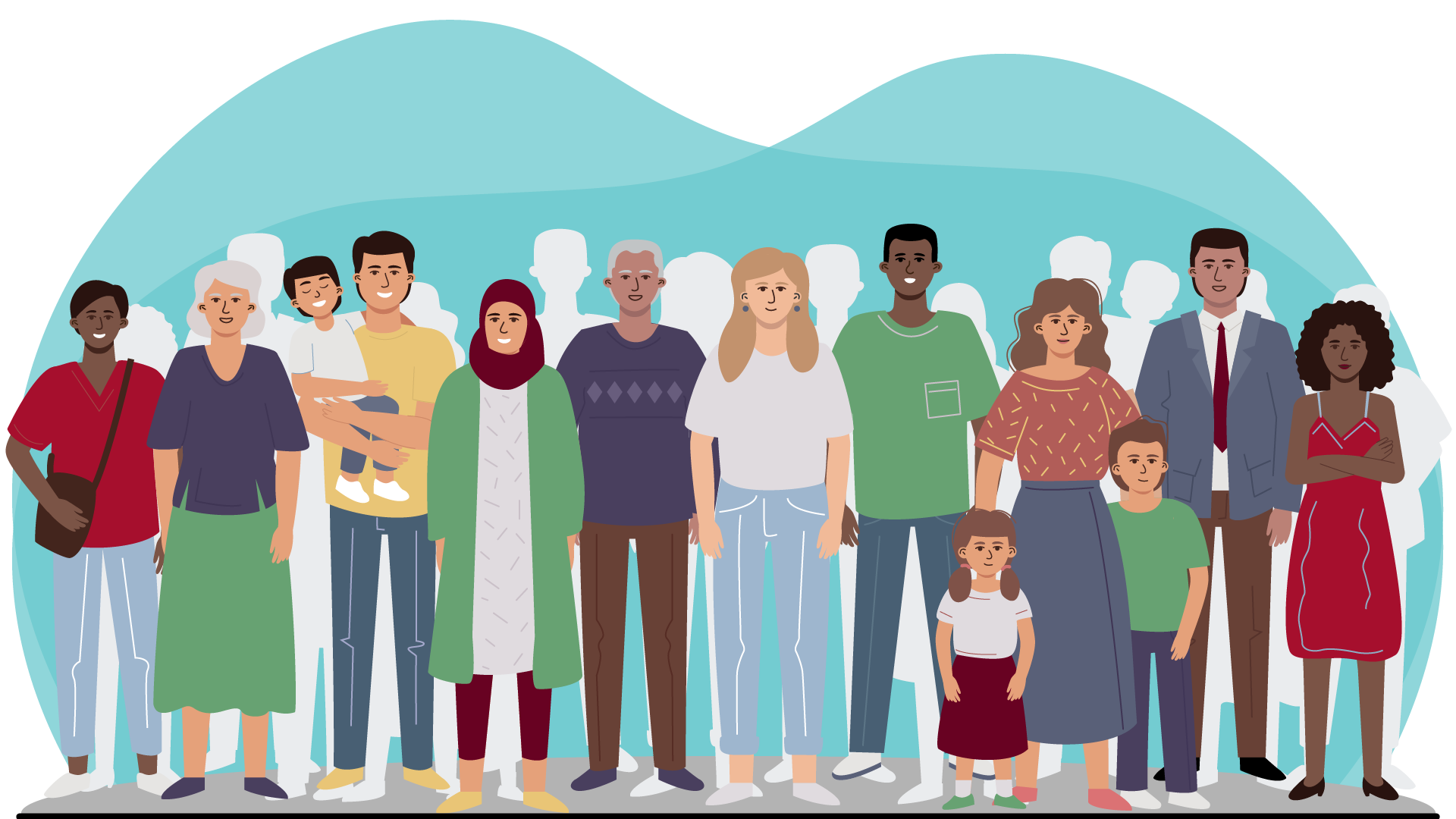


Population and Community Health represents one of the most expansive and interconnected domains in healthcare, examining health patterns, determinants, and interventions at the collective level rather than focusing solely on individual patient care. This thread forms a critical foundation for understanding how health is shaped by social, environmental, economic, and political forces that operate across entire populations.
Research demonstrates that clinical care accounts for only 10–20% of health outcomes, while social and economic factors (40–50%), health behaviors (30–40%), and physical environment (5–10%) play substantially larger roles. Understanding these upstream determinants—including socioeconomic status, education, employment, housing stability, access to nutritious food, neighborhood safety, and environmental exposures—is essential for effective medical practice. By developing competencies in population and community health, you’ll learn to identify and address these factors, ultimately creating more meaningful improvements in patient health than clinical interventions alone can achieve. (See References below for citations.)
Goals of the Population and Community Health thread
- Understand that physician responsibility includes care of communities as well as the care of individual patients
- Understand determinants of health as they relate to populations and communities
- Gain competencies in assessing the health status of populations and communities
- Gain agency and understanding of how to impact/improve the health of populations and communities, as well as individual patients
- Population health
- Community health
- Public health
Population health refers to the health outcomes of a group of individuals, including the distribution of outcomes within the group.
It focuses on health outcomes of groups of people, rather than individuals, with a broader look at social determinants of health and how they impact populations. Key to this work is the understanding and application of population-level data.
You will learn about:
-
- Measures of health and disease.
- Study design.
- Databases and data analysis.
-
- Epidemiology: The scientific discipline primarily concerned with identifying the distribution and causes of disease in populations, and as such encompasses a rich methodology including observational and experimental study designs, statistical methods, an understanding of pathogens, environmental and behavioral risk factors, and human biology.
- Biostatistics: Provides tools/techniques for collecting data and then evaluating and interpreting it to understand health and disease in human populations.
Community health refers to the health and quality of life of the people who live, work, or are otherwise active in a specific geographic region.
It focuses on non-clinical approaches for improving health, preventing disease, and reducing health disparities in a particular geographic location.
You will learn about:
-
- Social, behavioral, educational, environmental, economic, and medical determinants of health.
- Service Learning and local community partner organizations.
- Community Health Needs Assessments as an evaluation tool.
- Under-served areas of the state and how to impact the health of these communities.
- Planetary health topics.
Public health refers to “the science and art of preventing disease, prolonging life, and promoting health,” and what we do together as a society to ensure the conditions in which everyone can be healthy.” (Source: Kaiser Family Foundation.)
It is concerned with providing resources to city, county, and state residents, primarily run and financed by government.
-
- Disease prevention and health promotion: Government-run health resources (all levels of government)
- Outbreak investigations, disaster response, vaccination programs
- Public health campaigns
- Disease surveillance
- Promoting healthcare equity, quality, and accessibility
Watch the video below for a great explanation about population, community, and public health.
~3 min.
In this thread
Planetary Health as a Key Component
Planetary Health is an essential part of Population and Community Health that recognizes how human health depends on healthy natural systems. Climate change, pollution, biodiversity loss, and ecosystem damage directly impact health, often affecting the most vulnerable populations first and most severely.
Through this lens, you’ll explore how environmental changes create health challenges—from heat-related illness and changing disease patterns to food insecurity and population displacement. You’ll also learn how healthcare professionals can promote environmental sustainability in their practice and advocate for policies that protect both human and planetary health for future generations.
Where does this thread occur in the rest of the curriculum?

Medschlr has many sessions with Population and Community Health learning.
- FMS
- Clinical Campus Weeks
- Health equity thread
- Service Learning
- Case-Based Learning
- Interprofessional Education
- Leadership in Medicine and Healthcare
Year 4
- Leadership in Medicine and Healthcare capstone
- Clin 538/539: Rural and Urban Underserved rotation
- Clin 633: Global Health
- Clin 587: Virtual Public Health
Resources
Library resources
Gordis Epidemiology, 7th ed, by David D. Celentano; Moyses Szklo
References
- Baciu A, Negussie Y, Goosby A, Peek ME (Editors). Communities in Action: Pathways to Health Equity. Washington, DC: National Academies Press; 2017.
- Hood CM, Gennuso KP, Swain GR, Catlin BB. County Health Rankings: Relationships Between Determinant Factors and Health Outcomes. Am J Prev Med. 2016;50(2):129–135. doi:10.1016/j.amepre.2015.08.024
- U.S. Department of Health and Human Services, Office of the Assistant Secretary for Planning and Evaluation. Social Determinants of Health Literature Summaries. Washington, DC: HHS; 2022.
- World Health Organization. Social determinants of health. Geneva: WHO; [cited 2025].