



Long-Term Potentiation (LTP) is a form of synaptic plasticity where repeated stimulation of a synapse increases its strength, enhancing the likelihood of future activation and contributing to memory formation.
LTP mechanisms
-
Glutamate release
-
NMDA receptor activation
-
Calcium influx
-
Retrograde signaling via nitric oxide
-
Leading to
increased neurotransmitter release and synaptic responsiveness
The LTP process
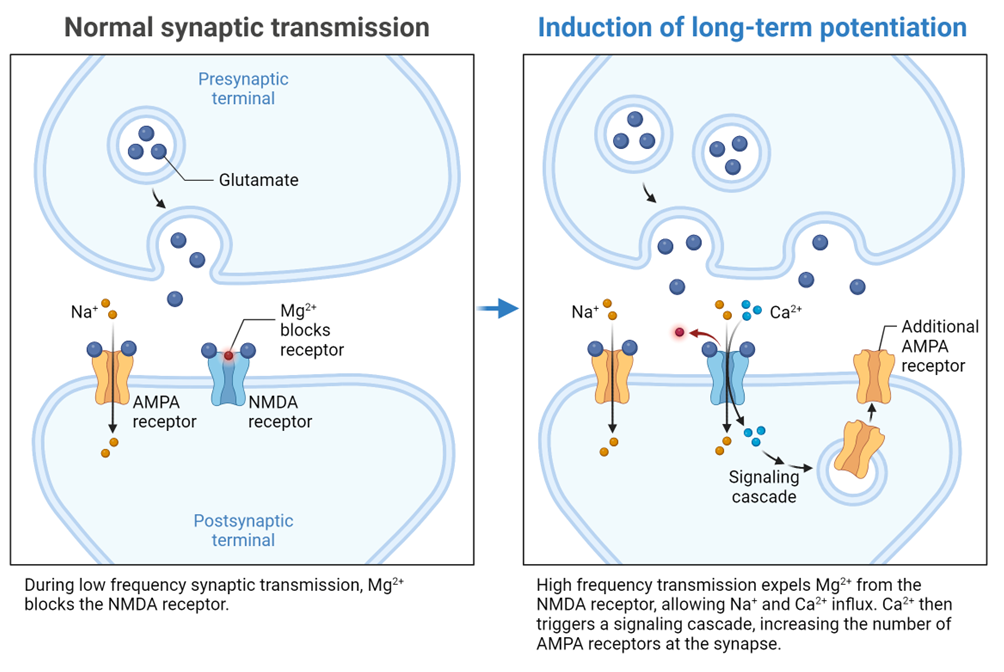
In this image, note the key components of the synapse in hippocampus such as:
- Presynaptic neuron releasing glutamate
- NMDA receptor activation and Mg²⁺ block removal
- Ca²⁺ influx into the postsynaptic neuron
- Inducing signaling cascade to increase numbers of receptors
- Nitric oxide (NO) acting as a retrograde messenger (not shown but plays an important role). This strengthens synaptic connections over time.
Review questions
Review
Which neurotransmitter is primarily involved in long-term potentiation in the hippocampus?
Review
A researcher blocks NMDA receptors in hippocampal neurons during a learning task. What is the most likely outcome of this intervention?
NMDA receptor activation is essential for calcium influx and downstream changes that support LTP and memory consolidation.