4. Limbic neurotransmitters and relevant neuroanatomy 

Home » Nervous System » Neuroanatomy » Limbic system and functional neurocircuitry » 4. Limbic neurotransmitters and relevant neuroanatomy
Headshot of Steve Lampa, PhD · Clinical Associate Professor
Steve Lampa
PhD · Clinical Associate Professor
envelope icon
Table of Contents

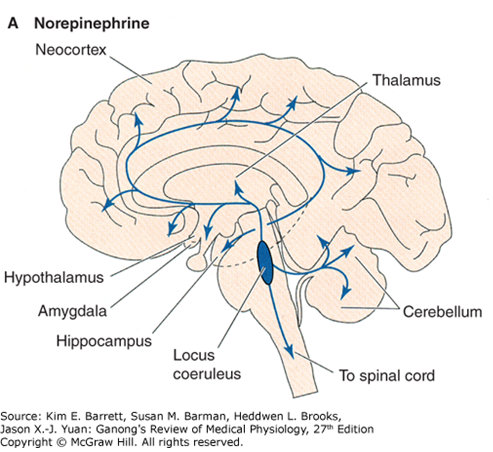
Norepinephrine (Noradrenaline)

Primary location

Concentrated in the hypothalamus, medial limbic system, locus ceruleus (rostral pons), and medulla.

Functions

Modulates alertness, attentiveness, and arousal.

Clinical relevance

  • Degeneration of noradrenergic projections from the rostral pons is implicated in neurodegenerative and psychiatric disorders.
  • Current research explores its role in cognitive and behavioral changes (e.g., Holland et al., 2021).

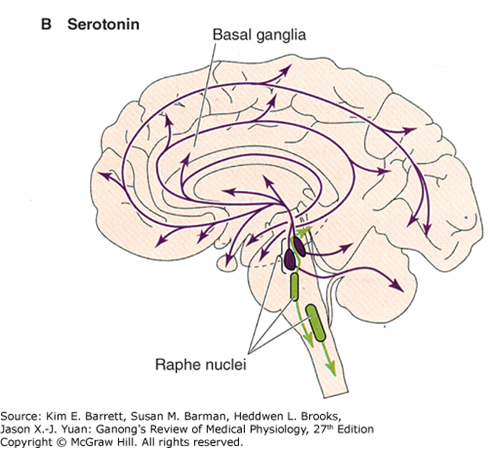
Serotonin (5-HT)

Primary location

Originates in raphe nuclei of the brainstem; projects to amygdala, septal nuclei, and limbic-associated cortex.

Functions

Regulates mood, sleep, appetite, temperature, pain perception, blood pressure, and vomiting.

Clinical relevance

SSRIs (Selective Serotonin Reuptake Inhibitors) are first-line treatments for depression, enhancing serotonin availability in synapses.

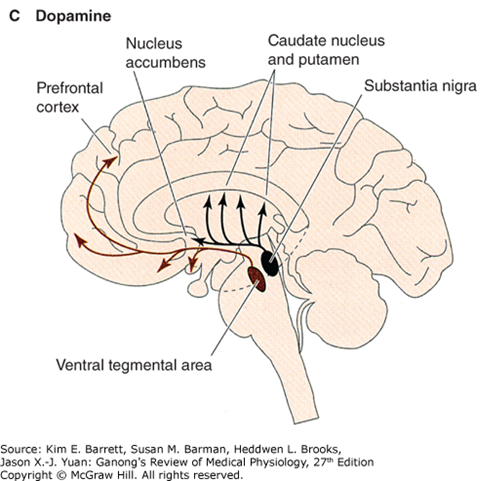
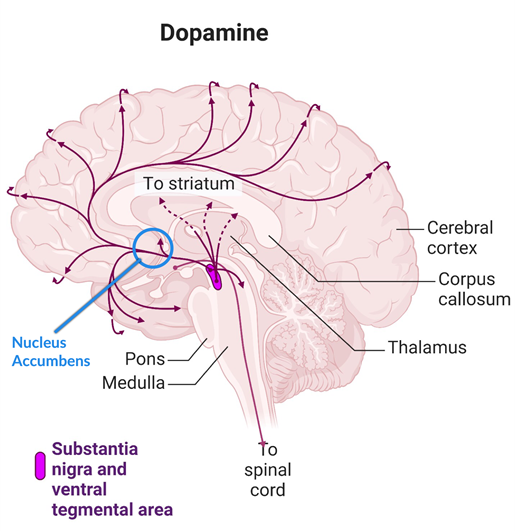
Dopamine

Primary location

Originates in the ventral tegmental area (VTA) and substantia nigra; projects via medial forebrain bundle and nigrostriatal pathway.

Functions

Involved in reward, motivation, and motor control.

Clinical relevance

  • Dopamine projections to nucleus accumbens mediate drug addiction and reward behaviors.
  • Aberrant stimulation of substantia nigra can induce severe depressive reactions.
  • Schizophrenia hypothesis: Excess dopamine activity may impair prefrontal cortex function, affecting thought organization and behavior.

previous

3. Long-term potentiation and memory consolidation

Next

Limbic system and functional neurocircuitry

Image credits

Unless otherwise noted, images are from Adobe Stock.