



Learning goals
- Identify and localize the neuroanatomy of the limbic system on diagrams and MRI images
- Describe how specific brain regions and functional neural pathways are involved in short- and long-term memory
- Explain how long-term potentiation is associated with establishing memories
- Describe the functional neural pathways and neurotransmitter circuits associated with neuronal excitation, inhibition, and modulation
The limbic system is a network of interconnected cortical and subcortical structures that integrate emotion, memory, motivation, and autonomic control.
Functions of the limbic system are represented by the acronym HOME—Homeostasis, Olfaction, Memory, and Emotion—it links physiological states with behavioral responses.
Clinically, limbic system dysfunction contributes to neuropsychiatric and neurological disorders such as anxiety, depression, and memory impairment, underscoring its central role in behavior and disease.
The neuroanatomy of these areas will be reviewed in the anatomy laboratory looking at the human brain later in the course.
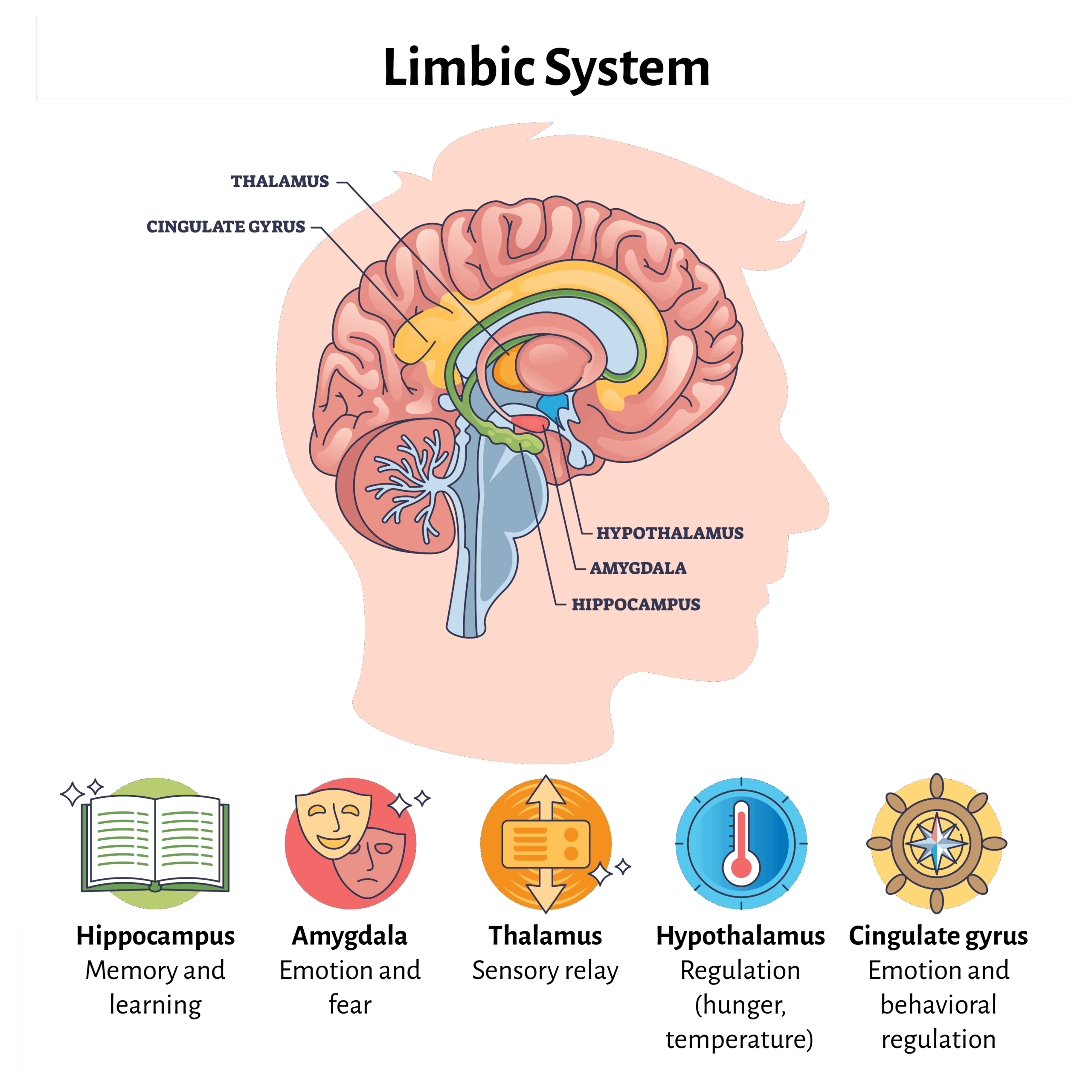
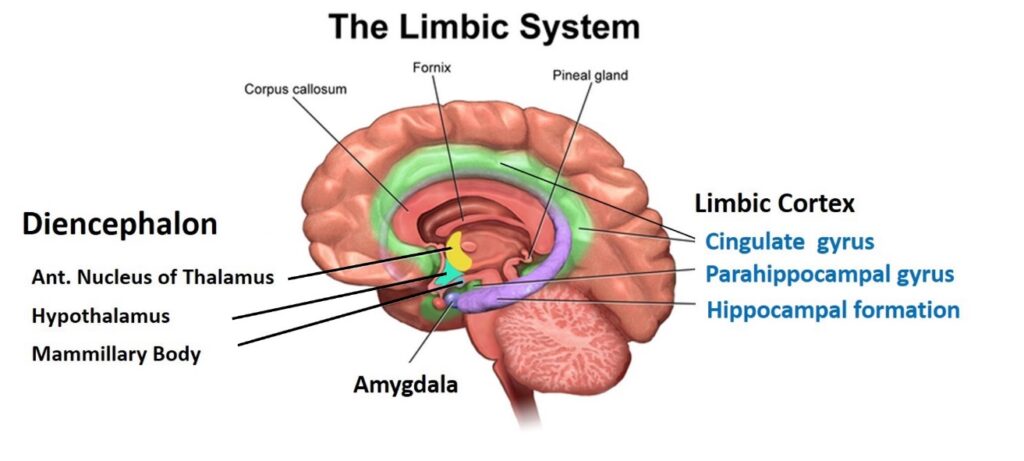
Neuroanatomy and limbic system functions
Image credits
Unless otherwise noted, images are from Adobe Stock.