



Lipids 4: Cholesterol and steroid metabolism

Home » Molecular Biology and Biochemistry » Lipids 4: Cholesterol and steroid metabolism
Headshot of Ted Chauvin, PhD · Associate Professor
Ted Chauvin
PhD · Associate Professor
envelope icon phone icon
Table of Contents

There is one chapter for suggested reading from Lippincott, Chapter 18: Cholesterol, Lipoprotein, and Steroid Metabolism. The short descriptions and videos listed below are some of the big-picture, high-yield points. The reading and the class session will go into more depth and detail. The reading guides are also posted.

As I have said in other modules, this reading guide is for people who have difficulty focusing on these types of chapters. Most students DO NOT need to use the guide.

Cholesterol, Lipoprotein, and Steroid Metabolism. Lippincott® Illustrated Reviews: Biochemistry, 8e. Medical Education: Health Library.

Cholesterol and Steroid Metabolism is covered in Chapter 18. 


Cholesterol: Structure, synthesis, and degradation 

  • What is cholesterol? (Fig. 18.2) Where is it synthesized? What are sterols and cholesteryl esters? (Fig. 18.2) 

  • How is cholesterol made? What is HMGCoA? (Fig. 18.3) What is mevalonate and why is it important during the synthesis of cholesterol? (Fig. 18.4) Be able to identify how the following are important in cholesterol synthesis: IPP, DPP, GPP, FPP, squalene, lanosterol, and cholesterol.  What enzymes are important? (Fig. 18.5) 

  • How is cholesterol synthesis regulated? Gene expression? Sterol-accelerated enzyme degradation? Phosphorylation/dephosphorylation? Hormonal regulation? (Fig. 18.6) 


Bile acids and bile salts 

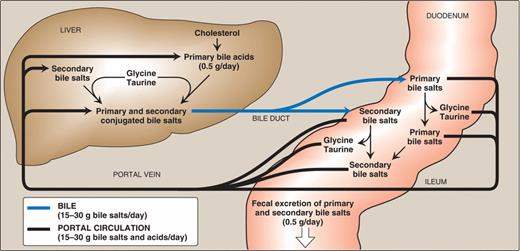
  • What are bile acids? (Fig. 18.8) Bile salts? (Fig. 18.9) How are they synthesized? How are they circulated from the liver? (Fig. 18.11) What is Cholelithiasis? Why does it occur?  What are the outcomes? Is there a treatment available? 


Plasma lipoproteins 

  • What are plasma lipoproteins? What are VLDLs? What are LDLs? What are HDLs?  What are chylomicrons? How are these different lipoproteins different? How are they similar?  What are apolipoproteins and how do they relate? (Fig. 18.13, 18.14, and 18.15) 

  • Explain the metabolism of chylomicrons; including the synthesis, assembly, modification, and the degradation of TAGs by lipoprotein lipase and its regulation. (Fig. 18.16) 

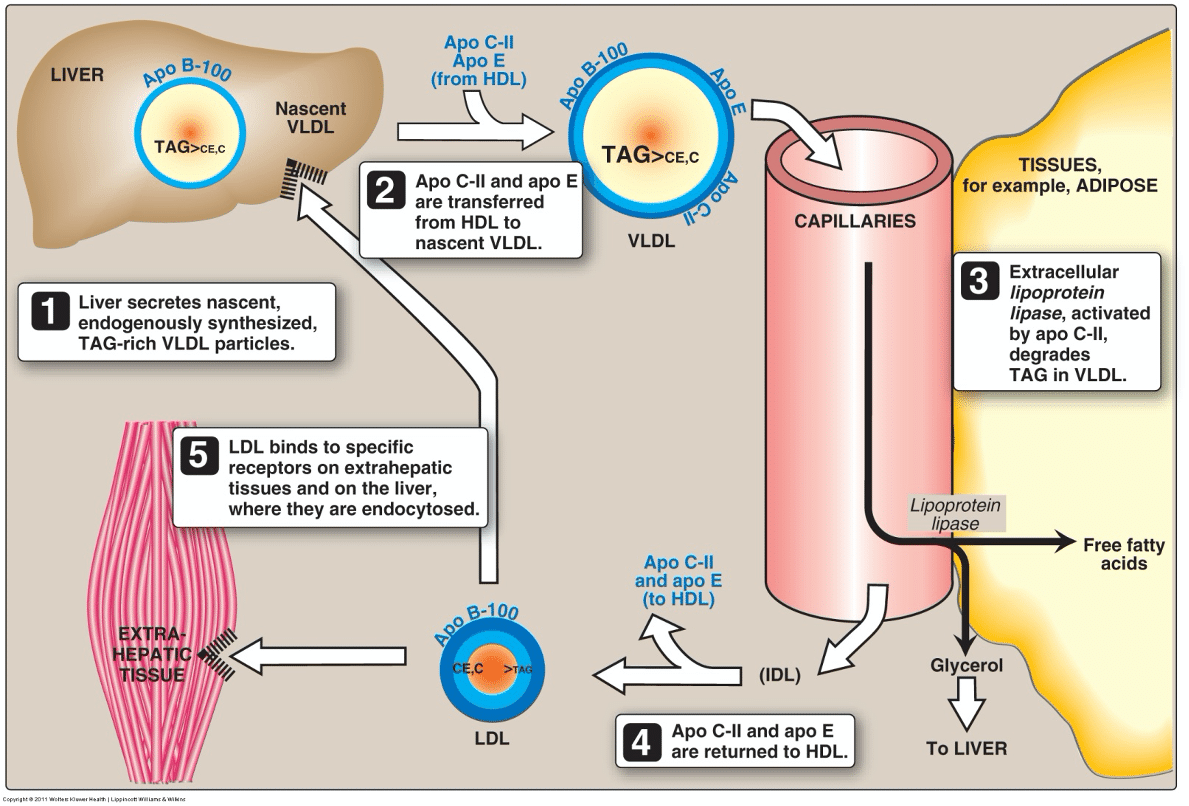
  • Be able to explain the metabolism of VLDL; including the release, modification and production of LDL. (Fig. 18.17) 

  • Be able to explain the metabolism of LDL. How does it fit into endocytosis (and why is this important)? Be able to explain this endocytosis and why it is important. How do macrophages take up LDL? (Fig. 18.22) 

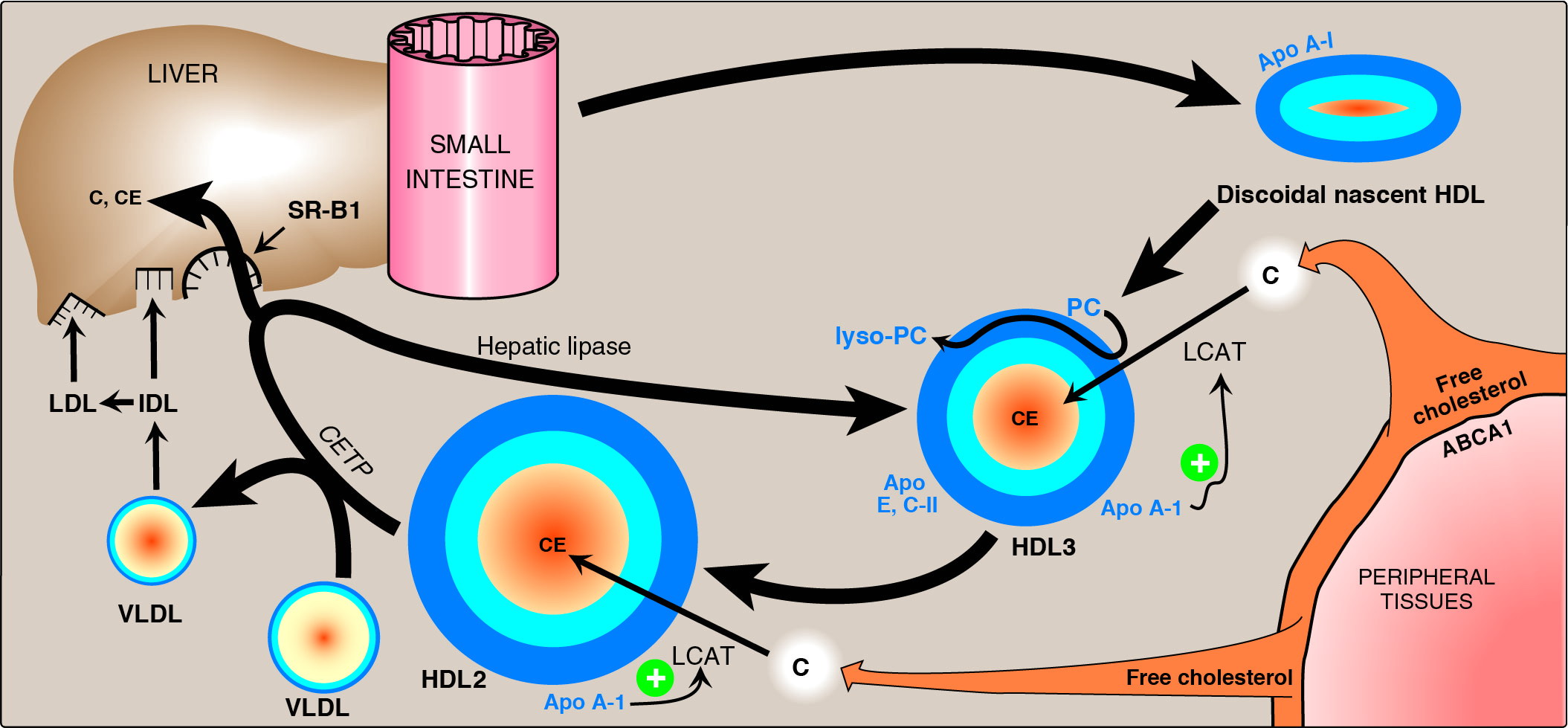
  • Be able to explain the metabolism of HDL. How does it relate to apolipoproteins? How does it uptake unesterified cholesterol? How does it esterify cholesterol? (Figure 18.23) What is its role in cholesterol transport? 

  • What is the role of lipoprotein (a) in heart disease? 

  • Identify the following: apoA-I, Lipoprotein lipase (LPL), apoB-48, apoB-100, apoE, LCAT, ACAT.


Steroid hormones 

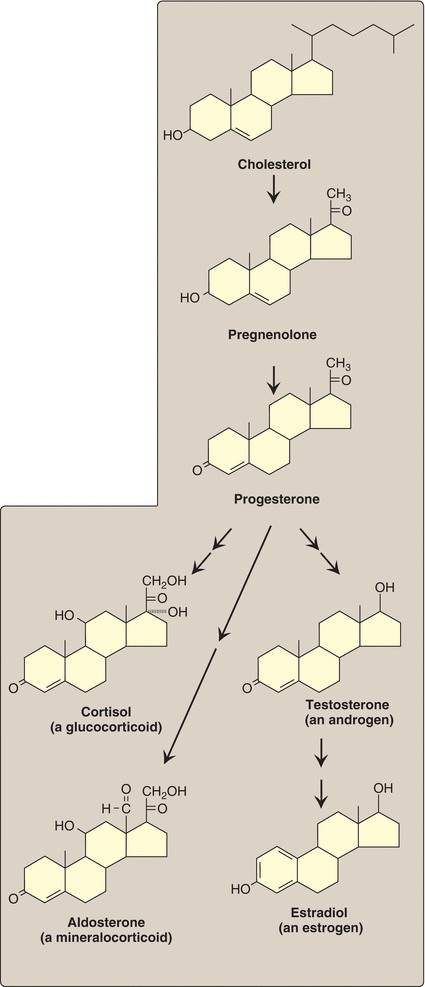
  • How are steroid hormones synthesized? (Fig. 18.25) How are they secreted from the adrenal gland? What are the different types of adrenal cortical steroid hormones? How are hormones secreted from the gonads? (Fig. 18.27) What is the mechanism of action of steroid hormones? (Fig. 18.28) 


Describe the structure, synthesis, and degradation of cholesterol and the control of these processes

  • HMG Co A Reductase 

  • Cholesterol synthesis 

  • Statins 


Describe the synthesis and function of bile acids and bile salts 

  • Cholesterol-7-alphA-hydroxylase 

  • Enterohepatic circulation of bile 

  • Bile salt and acid synthesis 

  • Cholelithiasis 

  • Cholestyramine 


Describe the metabolism of chylomicrons, very-low-density lipoprotein (VLDL), low-density lipoprotein (LDL), high-density lipoprotein (HDL), and explain how these lipoproteins impact health 

  • ApoA1 

  • ApoB 

  • ApoE 

  • ApoCII 

  • LCAT 

  • ACAT 

  • CETP 

  • HDL 

  • LDL 

  • VLDL 

  • Chylomicrons 

  • Lipoprotein lipase 

  • familial hypercholesterolemia, FH 

  • Abetalipoproteinemia 

  • Atherosclerosis 


Describe how steroids are synthesized and utilized by the body 

  • Desmolase 

Describe the structure, synthesis, and degradation of cholesterol and the control of these processes

This is a high-yield topic; therefore Osmosis has a video.

Describe the synthesis and function of bile acids and bile salts

The video above does cover bile acids. The enterohepatic circulation is important to know as well and, of course, Osmosis has a video on it.

Enterohepatic circulation of bile salts. Chapter 18, Lippincott Illustrated Reviews: Biochemistry, 7e.
Describe the metabolism of chylomicrons, very-low-density lipoprotein (VLDL), low-density lipoprotein (LDL), high-density lipoprotein (HDL), and explain how these lipoproteins impact health

The Osmosis video posted earlier gets into this a little bit. There are a lot of videos about the clinical implication of cholesterol in Osmosis. However, that is out of the scope of this session. I hope to introduce you to the biochemistry behind cholesterol and its movement. There are many apolipoproteins, but the ones listed below are ones you should recognize and understand.

Apolipoprotein Tissue source Lipoprotein distribution Metabolic function
ApoA1
Liver and intestine
HDL (chylomicrons)
Activates LCAT; the structural component of HDL
ApoB-48
Intestine
Chylomicrons
Assembly and secretion of chylomicrons from the small intestine
ApoB-100
Liver
VLDL, IDL, LDL
VLDL assembly and secretion; structural protein of VLDL, IDL, and LDL; ligand for LDL receptor
ApoCII
Liver
Chylomicrons, VLDL, IDL, HDL
Cofactor activator of LPL
ApoE
Liver
Chylomicron remnants, VLDL, IDL, HDL
Ligand for binding of several lipoproteins to the LDL receptor, to the LDL receptor-related protein (LRP), and possibly to a separate apoE receptor
Chylomicron metabolism. Chapter 18, Lippincott Illustrated Reviews: Biochemistry, 7e.
VLDL/LDL metabolism. Chapter 18, Lippincott Illustrated Reviews: Biochemistry, 7e.
HDL metabolism. Key: Apo = apolipoprotein; ABCA1 = ATP-binding cassette transport protein; C = cholesterol; CE = cholesteryl ester; LCAT = lecithin:cholesterol acyltransferase; VLDL, IDL, and LDL = very-low-, intermediate-, and low-density lipoproteins; CETP = cholesteryl ester transfer protein; SR-B1 = scavenger receptor B1
Chapter 18, Lippincott Illustrated Reviews: Biochemistry, 7e.

Describe how steroids are synthesized and utilized by the body

Chapter 18, Lippincott Illustrated Reviews: Biochemistry, 7e.

At the beginning of 501, we described how steroid hormones could control gene expression. Cholesterol is a major building block for sterol hormones. You will learn much more about this when you have more reproduction and urinary sessions. For now, I’d like you to be more concerned with how steroids are made and how they work (which you have already learned). Please do not worry about the different deficiencies associated with steroid hormone synthesis (although they can help you understand this pathway!).
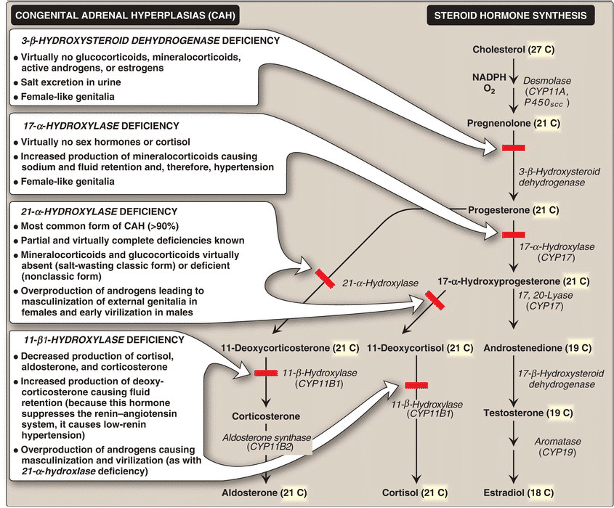
Chapter 18, Lippincott Illustrated Reviews: Biochemistry, 7e.

question

In steroid producing tissues, such as the liver, the rate-determining step of synthesis of steroid hormones is catalyzed by a cytochrome P450, “desmolase.”

Synthesis of steroids involves shortening the hydrocarbon chain of cholesterol and hydroxylating the steroid nucleus. The initial and rate-limiting reaction converts cholesterol to the 21-carbon pregnenolone. It is catalyzed by the cholesterol side-chain cleavage enzyme, a cytochrome P450 (CYP) mixed-function oxidase of the inner mitochondrial membrane that is also known as P450scc and desmolase. NADPH and O2 are required for the reaction. The cholesterol substrate can be newly synthesized, taken up from lipoproteins, or released by an esterase from cholesteryl esters stored in the cytosol of steroidogenic tissues.

question

James, the father of two sons, Brent and Matty, died of a stroke at 34 years of age. Brent, age 28, has a total serum cholesterol level in the normal reference range (100–199 mg/dL) and is not taking any cholesterol-lowering medication. Matty, age 22, has a pre-treatment total serum cholesterol level of 330 mg/dL and is prescribed a statin drug. What is the most likely cause of Matty’s high cholesterol level?

Defects in the synthesis of functional LDL receptors causes a significant elevation in plasma LDL-C. Patients with such deficiencies have type IIa hyperlipidemia (familial hypercholesterolemia [FH]) and premature atherosclerosis.