There is one chapter for suggested reading is from Lippincott: Chapter 17: Phospholipid, Glycosphingolipid, and Eicosanoid Metabolism. The short descriptions and videos listed below are some of the big-picture, high-yield points. The reading and the class session will go into more depth and detail. The reading guides are also posted.
As I have said in other modules, this reading guide is for people who need help focusing on these types of chapters. Most students DO NOT need to use the guide.
Phospholipid, Glycosphingolipid, and Eicosanoid Metabolism are covered in Chapter 17.
Phospholipids
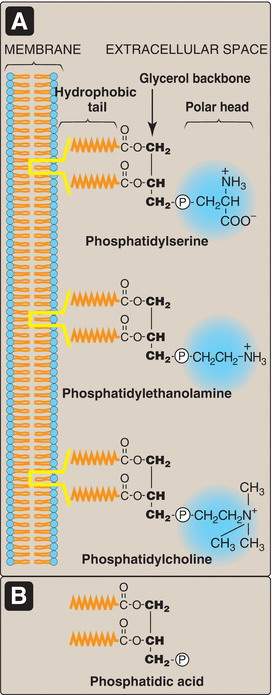
What is a glycerophospholipid? Be able to identify the five Glycerophospholipids. (Figure 17.1) What is cardiolipin? (Fig. 17.2) What are plasmalogens? What is platelet-activating factor (PAF)? (Fig. 17.3) What is sphingomyelin? (Fig. 17.4)
Phospholipid synthesis
How are phospholipids synthesized (including phosphatidic acid, phosphatidylethanolamine, and phosphatidyl choline)? (Fig. 17.5 and 17.6) Why is choline reutilized? What is surfactant and why is it important? How does this relate to “respiratory distress syndrome”? There is a special mechanism for producing PC in the liver form phosphatidyl serine, what is it? (Fig. 17.6)
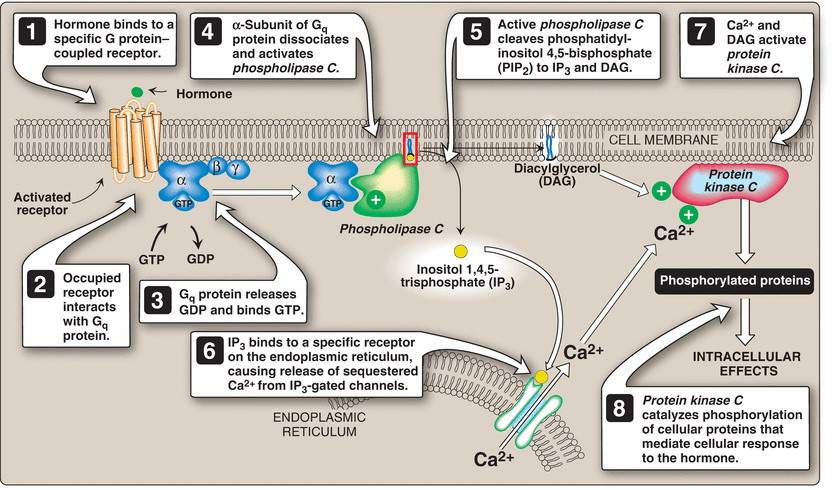
What is phosphatidyl serine? What is phosphatidylinositol and how does it relate to cell signaling? How does PI relate to membrane protein anchoring? (Fig. 17.8)
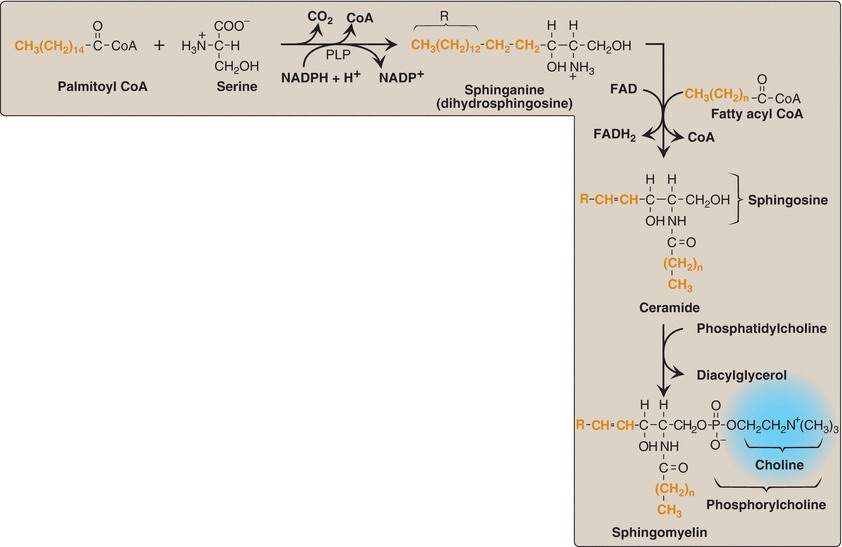
How is sphingomyelin made, why is it important? How does phosphatidylglycerol relate to cardiolipin?
Phospholipid degradation
There are four different phospholipases. What are they and where do they cut?
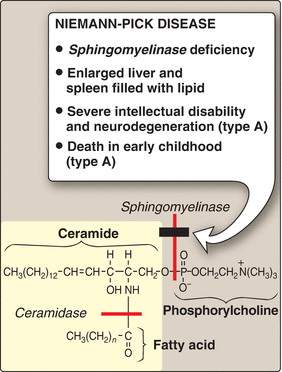
(Fig. 17.11) Where are they present? How are sphingomyelin and phosphoglycerides degraded? How is Niemann-Pick disease related to sphingomyelin degradation?
(Fig. 17.12)
Glycosphingolipids
Be sure to understand how ceramide, glucose, galactose, and N-acetylgalactosamine are important in glycosphingolipids. (Fig. 17.14, 17.15 and 17.18) How do these macromolecules relate to neutral glycosphingolipids?
What is a ganglioside? Where are they found? What is a sulfatide, and where are they found?
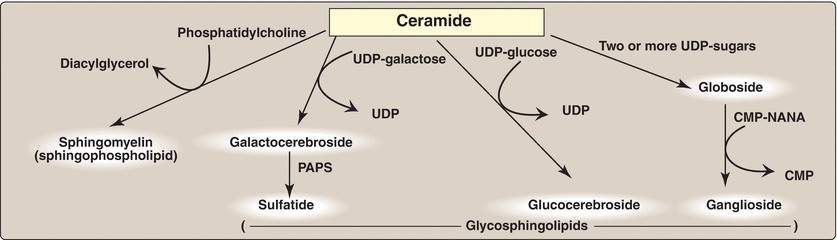
Understand the general synthesis and degradation of glycosphingolipids. Why is sulfotransferase used? How do you make sphingomyelin, sulfatide, glucocerebroside and ganglioside from ceramide? (Fig. 17.8)
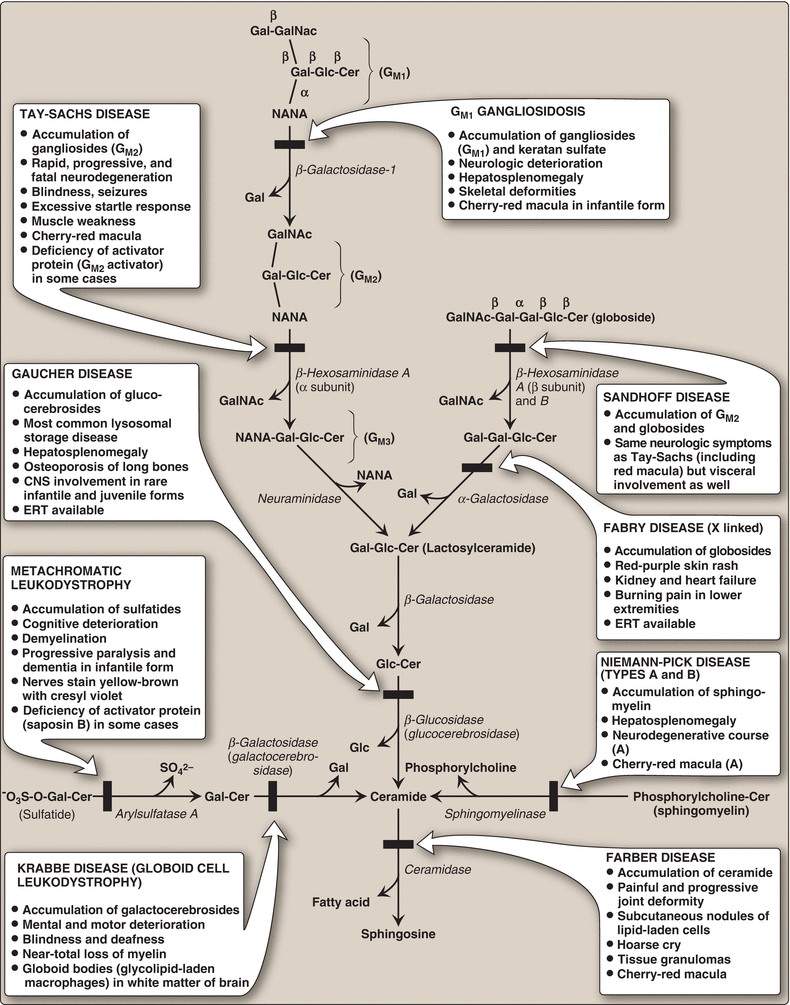
What is sphingolipidosis? Tay-sachs disease? Gaucher disease? Metachromatic leukodystrophy? Krabbe disease? Sandhoff disease? Fabry disease? Farber disease? All of these diseases are related to sphingolipids. Have a good understanding of where in the degradation pathways there are problems for each one. (Fig. 17.20)
Prostaglandins, thromboxanes, and leukotrienes
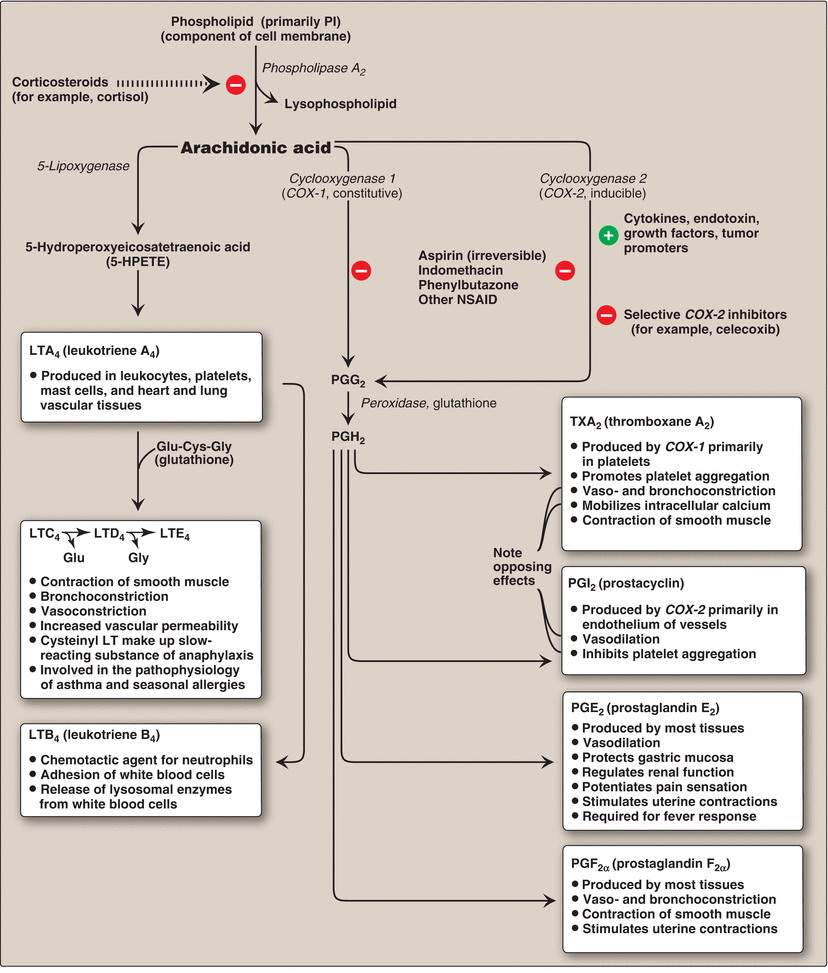
What are eicosanoids, prostaglandins, and thromboxanes? Why are they important? How are they synthesized? How is PGH2 made? What is COX-1 and COX-2? (Fig. 17.22)
How can prostaglandins be inhibited? (Fig. 17.23) What are leukotrienes? How are they made?
Why are thromboxanes important in platelet homeostasis? (Fig. 17.24) What is prostacyclin?
Describe the structure, synthesis, and degradation of phospholipids and explain their importance in biological functions.
Phosphatidylinositol in cell signaling
Phospholipase A2
Phospholipase C
Platelet activating factor
Ceramide
Describe the structure, synthesis, and degradation of sphingolipids and explain their importance in biological functions.
Niemann-Pick disease
Sphingolipidosis
Tay-Sachs disease
Gaucher Disease
Metachromatic leukodystrophy
Sandhoff disease
Sphingomyelinase
Degradation of glycosphingolipids
Degradation of sphingolipids
Ceramide synthesis and use
Describe the synthesis of prostaglandins, thromboxanes, and leukotrienes and explain their importance in biological functions.
Cyclooxygenase 1 and 2 (Cox 1 and Cox2)
5-Lipoxygenase
Eicosanoids – Prostaglandins, Leukotrienes and Thromboxanes
Prostaglandins in platelet homeostasis
Describe the structure, synthesis, and degradation of phospholipids, explain their importance in biological functions, and identify associated pathologic conditions
As I stated in class (or will state), don’t get too hung up on the synthesis. However, you should be able to recognize that phospholipids are different and have specific functions. One that we will focus on here is phosphatidylinositol. I will focus on only some of the PLs here. Please read the assigned chapter if you want or need more detail.
Structures of some glycerophospholipids.
Chapter 17, Lippincott Illustrated Reviews: Biochemistry, 7e.
Phosphatidylinositol signaling
This signaling pathway is essential to know, and there is more discussion on it in the session.
Describe the structure, synthesis, and degradation of sphingolipids, explain their importance in biological functions, and identify associated pathologic conditions
The big “take-home” points here are glycosphingolipids are complex structures, and they all use ceramide as a building block. Sugars are added sequentially and removed sequentially as well. The sphingolipidoses listed below are very high-yield items to remember.
Describe the synthesis of prostaglandins, thromboxanes, and leukotrienes, explain their importance in biological functions, and identify associated pathologic conditions
Below is an overview of the biosynthesis and function of some important prostaglandins (PG), leukotrienes (LT), and thromboxanes (TX) from arachidonic acid. Remember that arachidonic acid comes from dietary linoleic acid. Also, remember that COX-1 is constitutive and COX-2 is inducible. 5-Lipoxygenase is for leukotrienes.
A nine-year-old boy presents with hepatosplenomegaly and osteoporosis in his femurs. He is diagnosed with Gaucher disease, the most common lysosomal storage disease. Which enzyme is defective in Gaucher disease?
Patients with Gaucher disease have a deficiency of glucocerebrosidase (aka β-glucosidase), resulting in glucocerebroside accumulation in the lysosomes of cells of the liver, spleen, and bone marrow