



- Suggested reading
- Reading guide
- Need to Know
- Osmosis notes
One chapter to read from Lippincott for this session. Chapter 12 is on Monosaccharide and Disaccharide Metabolism. This session is about enzymes (of course) and what happens when someone can’t digest carbs properly. The reading guide is also posted. As I said in other modules, this reading guide is for people who have a difficult time focusing on these types of chapters. Most students DO NOT need to use the guide.
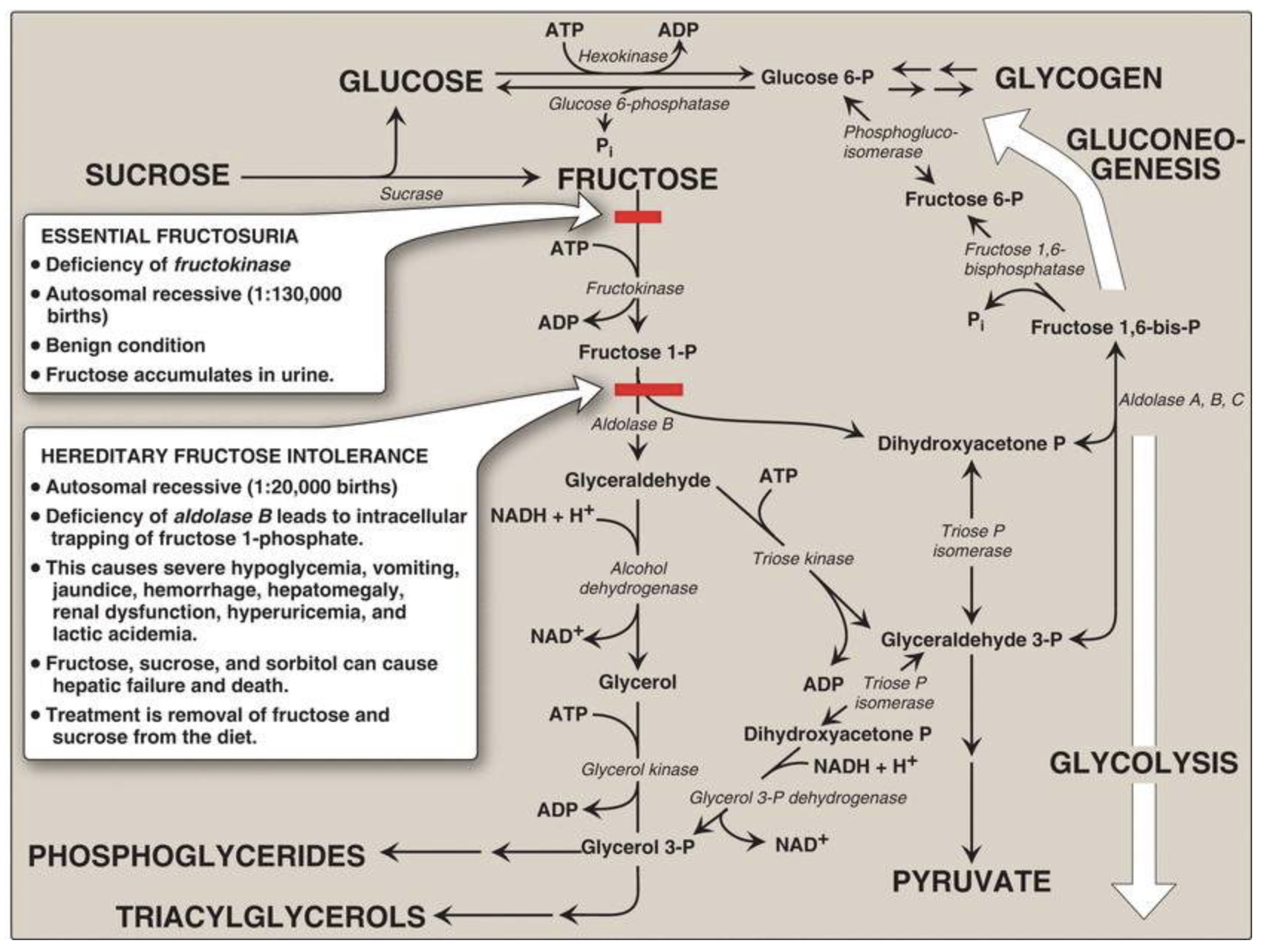
Diagram and describe fructose metabolism and the mechanisms of essential fructosuria and fructose intolerance
-
Fructose metabolism
-
Fructokinase
-
Hereditary fructose intolerance
-
Essential fructosuria
-
Aldolase B
Diagram and describe normal and defective lactose and sorbitol metabolism
-
Sorbitol Metabolism
-
Lactose metabolism
-
Lactase
-
Lactose intolerance
-
Aldose reductase
Diagram and describe galactose metabolism and the mechanisms of disorders of galactose metabolism
-
Galactose metabolism
-
Galactose 1-phosphate uridyltransferase (GALT)
-
Galactokinase
-
Classic Galactosmeia
-
Galactokinase deficiency
Osmosis does a really good job with high-level notes for most of the disorders we will be discussing today.
Diagram and describe fructose metabolism and the mechanisms of essential fructosuria and fructose intolerance
Enzymes to remember:
-
- Fructokinase (essential fructosuria)
- Aldolase B (hereditary fructose intolerance)
Diagram and describe normal and defective lactose and sorbitol metabolism

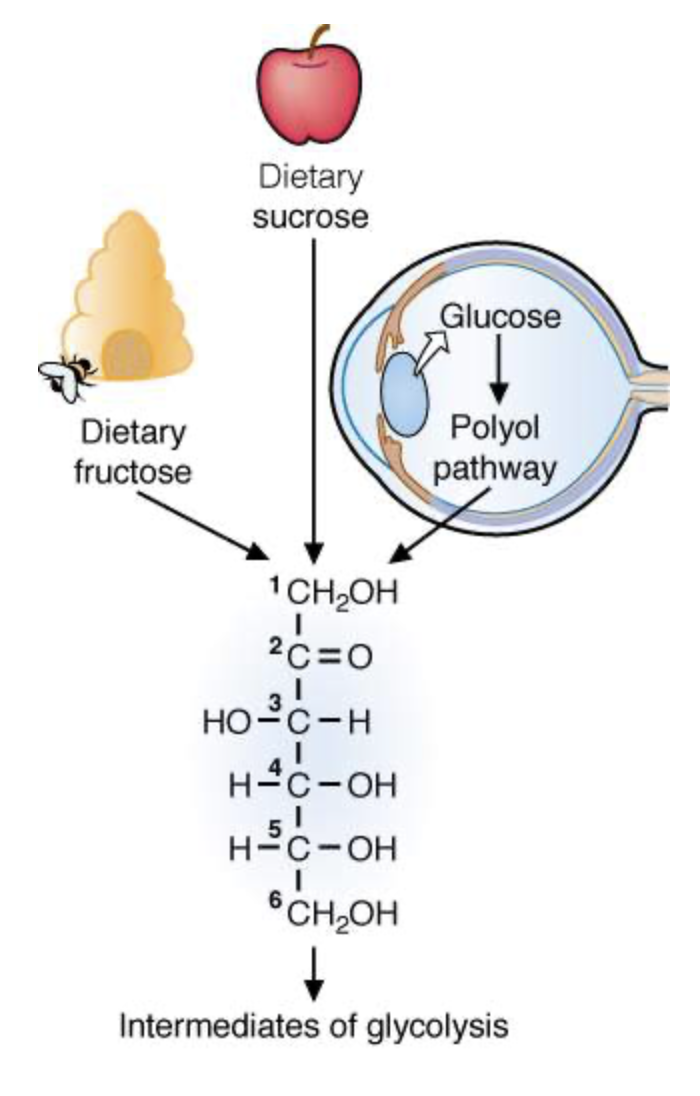
Aldose reductase is found in many tissues, including the retina and lens. It reduces glucose, producing sorbitol. This is known as the polyol pathway, which consists of converting glucose to sorbitol via aldose reductase and then converting sorbitol to fructose via sorbitol dehydrogenase. With hyperglycemia, sorbitol can be “trapped” in tissues. In a previous class, we discussed lactose metabolism. The chapter goes into it a bit more, but it’s not that high yield.
The sugar fructose is found in the diet as the free sugar in foods such as honey or as a component of the disaccharide sucrose in fruits and sweets. It also can be synthesized from glucose via the polyol pathway. In the lens of the eye, the polyol pathway contributes to the formation of cataracts. Fructose is metabolized by conversion to intermediates of glycolysis.
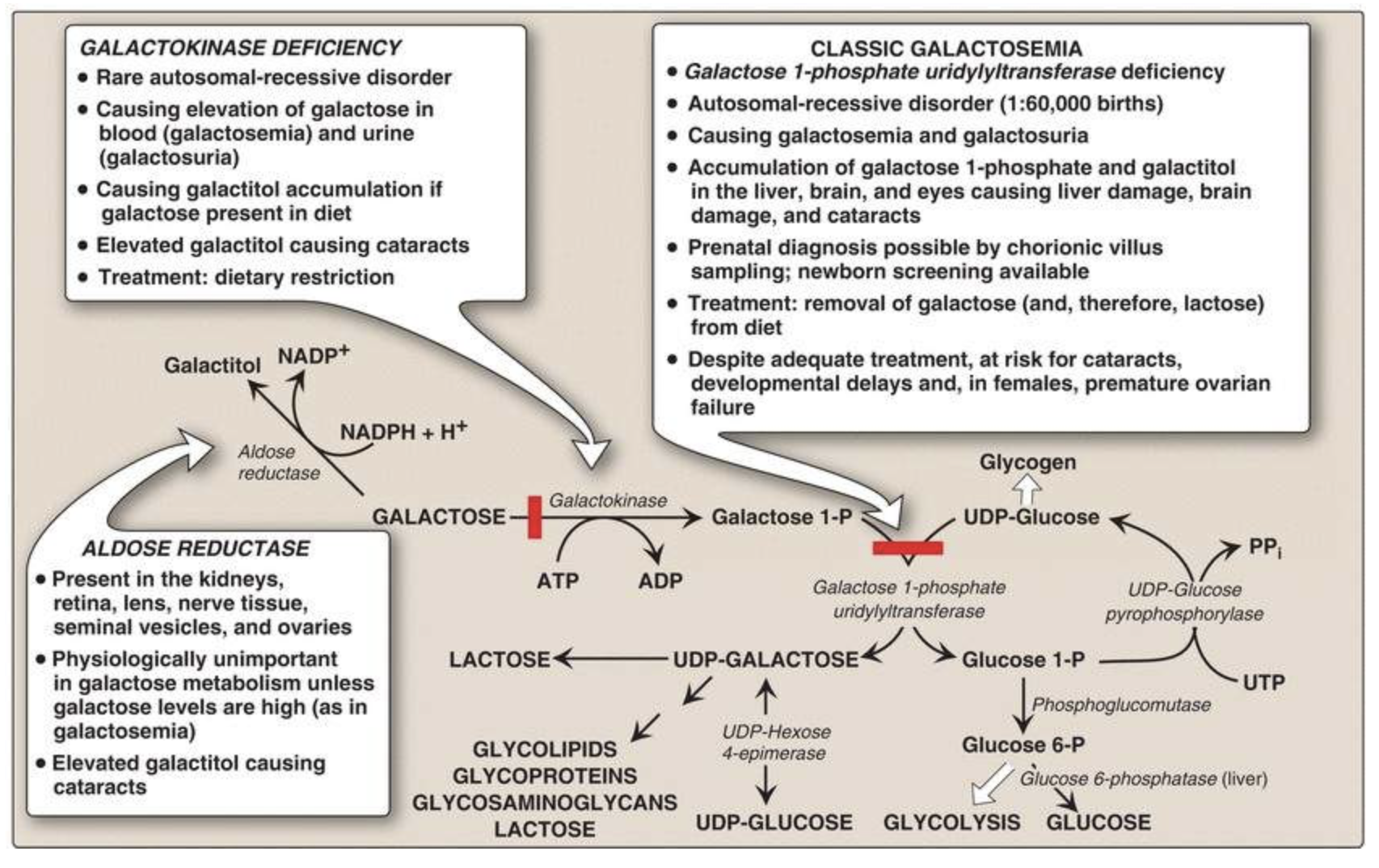
Diagram and describe galactose metabolism and the mechanisms of disorders of galactose metabolism
Enzymes to remember:
-
- Galactokinase (Galactokinase deficiency)
- Galactose 1-phosphate uridylyltransferase (GALT) (Classic Galactosemia)
