


- Suggested reading
- Reading guide
- Need to Know
If you read chapter 7 from Lippincott, you should have no issue with the objectives. However, use your time wisely. If you have a strong biochemistry background, this chapter may not be needed. Also, I’m posting a “reading guide.” This reading guide is for people who have a difficult time focusing on these types of chapters. Most students DO NOT need to use the guide.
Diagram and describe the structure and physiological roles of mono-, di-, oligo-, and polysaccharides, including their digestive pathways and metabolic significance
-
Isomer
-
Epimer
-
Galactose
-
Glucose
-
Lactose
-
Fructose
-
Sucrose
-
Ribose
-
Maltose
Differentiate α- and β-anomers of glucose based on the orientation of the anomeric hydroxyl group, and explain their impact on carbohydrate structure and digestibility
-
Sugar structure
-
Reducing sugar
-
Beta sugars
-
Alpha sugars
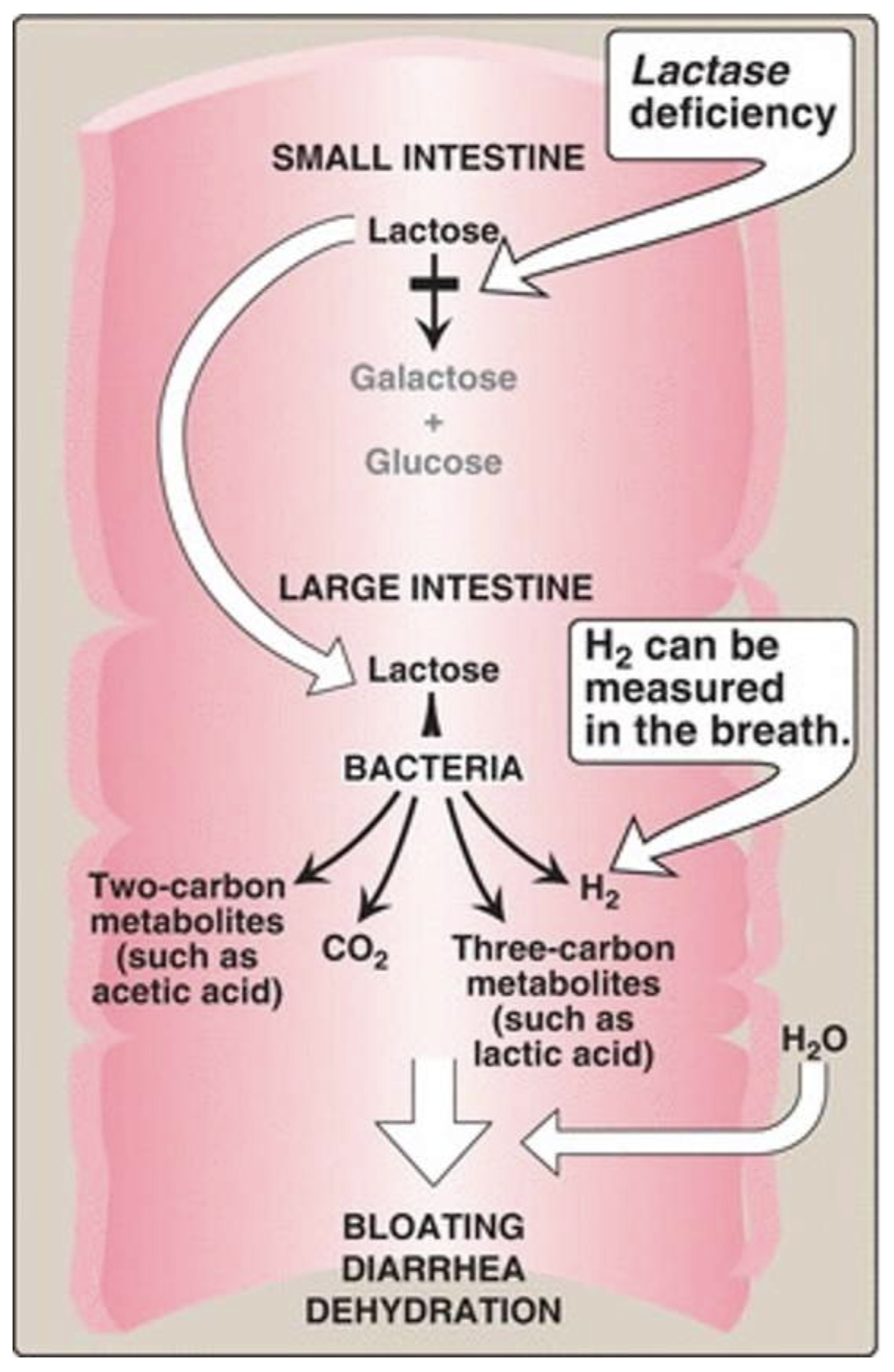
Diagram and describe the digestion of carbohydrates from mouth to cecum, identifying key enzymes and transporters, and explain how enzyme deficiencies (e.g., lactase, sucrase-isomaltase) lead to malabsorption symptoms
-
Carbohydrate digestion
-
a-amylase
-
Lactase
-
Sucrose
-
Maltase
-
Sucrase-isomaltase
-
Lactose intolerance
-
Congenital sucrase-isomaltase deficiency
Diagram and describe the structure and physiological roles of mono-, di-, oligo-, and polysaccharides, including their digestive pathways and metabolic significance
This Osmosis video does a good job explaining sugars. It does not fit “perfectly” with all three learning goals, but does hit key points in all of them. It’s worth a watch.
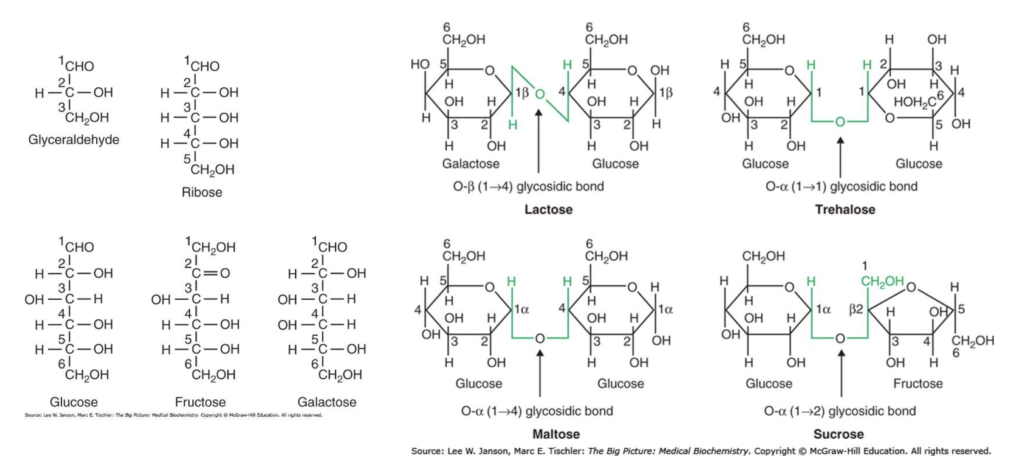
Be able to recognize what the structure of different sugars is. The figure below is a good one to help with that.
In addition, recognize what epimers and isomers are.
Differentiate α- and β-anomers of glucose based on the orientation of the anomeric hydroxyl group, and explain their impact on carbohydrate structure and digestibility
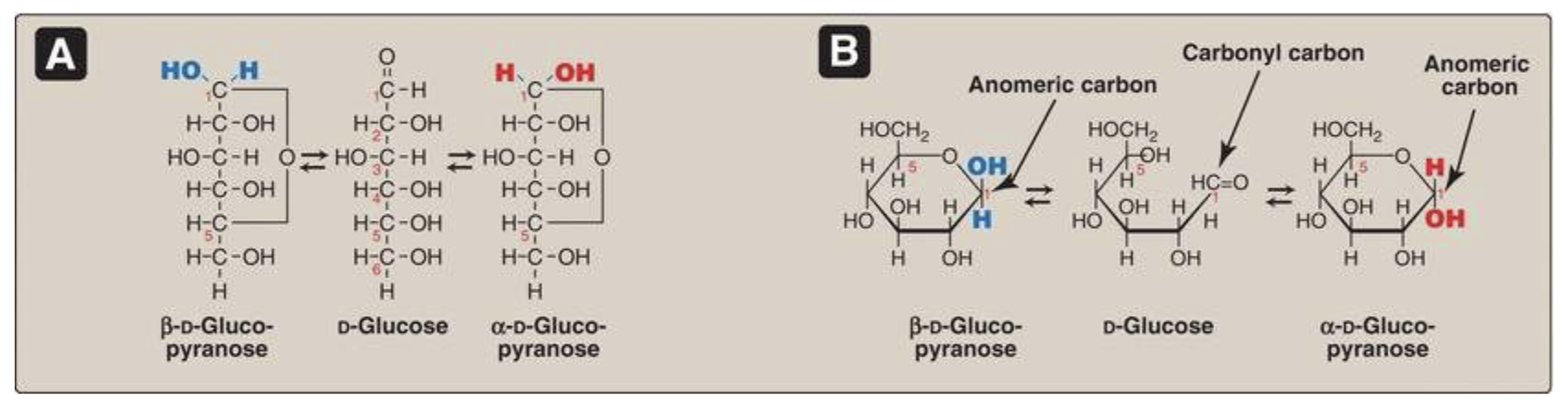
The creation of an anomeric carbon (the former carbonyl carbon) generates a new pair of isomers, the α and β configurations of the sugar (for example, α-d-glucopyranose and β-d-glucopyranose), as shown in the figure below that are anomers of each other. Enzymes can distinguish between these two structures and use one or the other preferentially. For example, glycogen is synthesized from α-d-glucopyranose, whereas cellulose is synthesized from β-d-glucopyranose. The cyclic α and β anomers of a sugar in solution spontaneously (but slowly) form an equilibrium mixture, a process known as mutarotation (as illustrated in the figure). (adapted from Lippincott Illustrated Reviews: Biochemistry, 7e)
In case you did not read the chapter
I want to make sure you see the following (taken from a box in the text). This will become essential later during the carbohydrate section:
A colorimetric test can detect a reducing sugar in urine. A positive result is indicative of an underlying pathology (because sugars are not normally present in urine) and can be followed up by more specific tests to identify the reducing sugar.
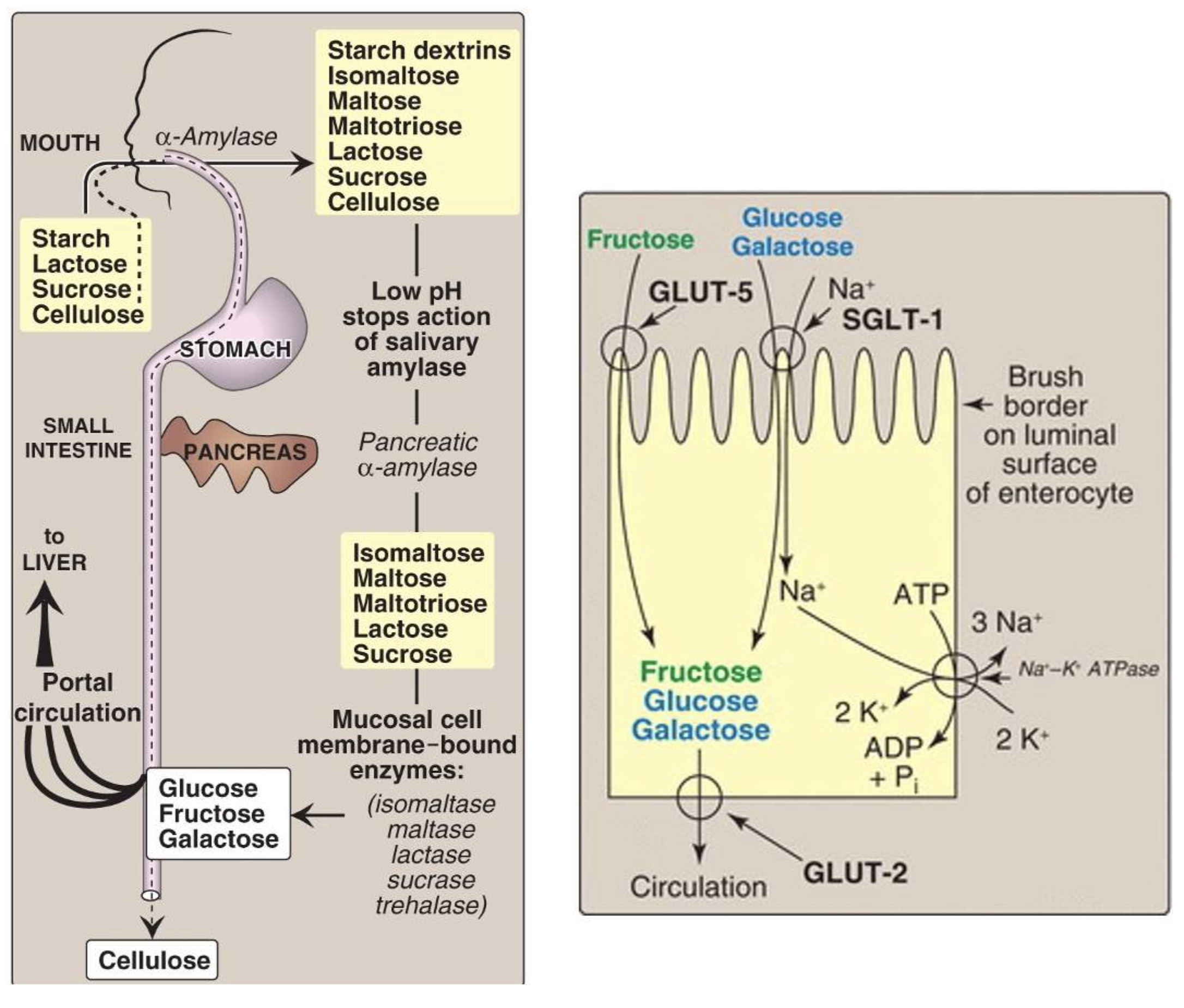
Diagram and describe the digestion of carbohydrates from mouth to cecum, identifying key enzymes and transporters, and explain how enzyme deficiencies (e.g., lactase, sucrase-isomaltase) lead to malabsorption symptoms
Congenital sucrase-isomaltase deficiency
- Autosomal-recessive disorder
- Prevalence of 1:5,000 in individuals of European descent and appears to be much more common (up to 1:20) in the Inuit people of Greenland and Canada
- Sucrase and isomaltase are enzymic activities of a single protein
- Symptoms: Watery diarrhea, dehydration, abdominal distension and discomfort, possible malnutrition, and failure to thrive
- Treatment: Diet and a drug (Sucraid a sacrosidase oral solution)