



Plasmodium/Malaria

Headshot of Joanna Breems, MD, FACP · Clinical Assistant Professor
Joanna Breems
MD, FACP · Clinical Assistant Professor
envelope icon phone icon
Table of Contents

This is the LP for this topic. The content is also on the Protozoa page. It needs to go on its own malaria content page and then delete it from the Protozoa page (feed it with a Posts query) and delete it from here (also feed it with a Posts query).

This URL may need to change.

Blood and tissue

Malaria/Plasmodium

One of the major causes of mortality due to infectious diseases worldwide.

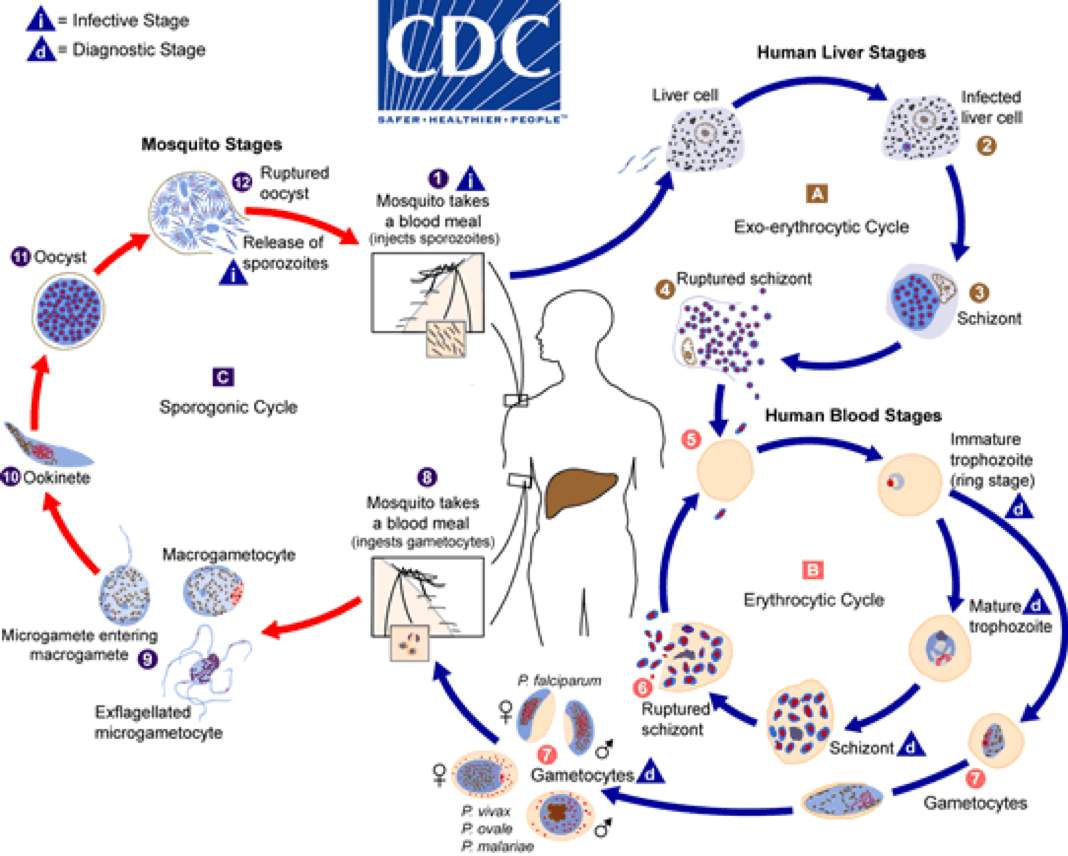
Transmitted by female anopheles mosquitoes (or blood transfusion). There is geographic distribution of species types and geographic variation in pharmacologic susceptibilities. In United States, persons who travel to visit friends and family are highest risk group. Clinical disease is typically manifested by high fever usually related to international travel. Paroxysmal episodes of fevers are classically described and represent the blood phase of parasitic replication. In ‘real world’ paroxysms are not always well defined. Complications of malaria occur from species that have chronic/latent forms and from P. falciparum which has potential to cause severe multisystem.

Causes most fatal cases, cerebral malaria; parasites inside RBCs cause hemolysis.
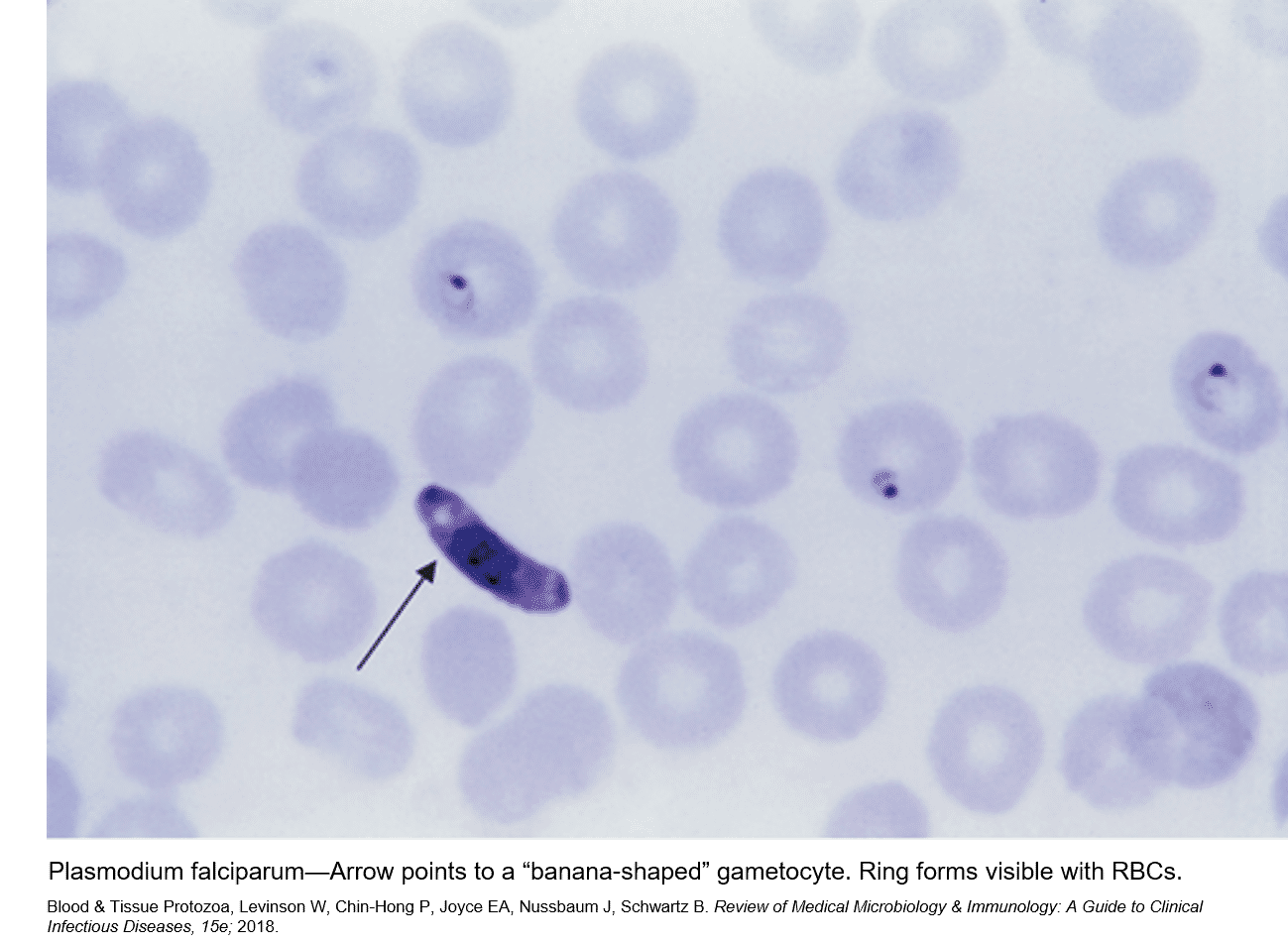
 

Banana gametocytes. Increased resistance to chloroquine and other antiparasitic drugs except in Central America and Caribbean areas (such as Haiti). No hepatic latent stage, so no relapsing form.

Prevention with atovaquone-proguanil (expensive), mefloquine (side effects psychiatric and cardiac), or doxycycline.

Therapy with artemether combination drugs (e.g., artemether-lumefantrine), especially for severe malaria. Other options atovaquone-proguanil, quinine, mefloquine. Chloroquine rarely appropriate.

Relapsing forms due to hypnozoites in the liver.

P. vivax infects younger RBCs (larger size). P. ovale is only in West Africa.

Erythrocyte stage is usually sensitive to chloroquine, but liver stage for these two species requires primaquine Rx after treatment of the erythrocytic stage. Check for G6PD deficiency, especially before using primaquine.

Infects older RBCs (smaller size).

Malaria variant seen in South Pacific region (from monkeys).
check yourself

Fill in this summary table to check your learning.

See also in the Micro-ID session guide