


Parasitology 1: Ms. Xiu

Headshot of Joanna Breems, MD, FACP · Clinical Assistant Professor
Joanna Breems
MD, FACP · Clinical Assistant Professor
envelope icon phone icon
Tap the arrow to view the case.
Ms. Xiu, a 37-year-old nurse from Walla Walla, lives in Tanzania, where she works as a manager and volunteer coordinator for a pediatric health non-governmental organization (NGO). During her recent fundraising trip to Washington state, she developed a low-grade fever that she dismissed initially. Then she developed dull upper-right quadrant pain. At this point, she presents to her primary care clinic.
During her evaluation, she reports that the pain is relatively constant, and not associated with food intake. Her medical history is relatively unremarkable. She notes that she is very cautious about mosquito avoidance and hasn’t yet had any vector-borne illnesses. She did have an episode of diarrhea several months ago. She notes that it was worse than typical traveler’s diarrhea, with more mucous. But by the time she made arrangements to get to a medical center in Tanzania, the symptoms had improved.

Questions for consideration

Think about these questions as you watch the video and review the pre-class material.

Acute GI: Protozoa

Watch these two videos.

Amebiasis: Entamoeba histolytica

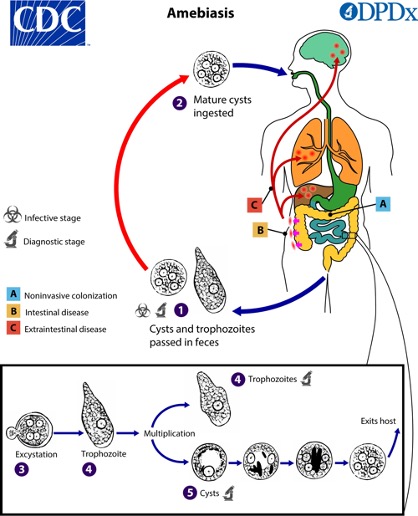
  • Fecal-oral spread of cysts.
  • Resource-limited areas (i.e., Mexico, Africa, India, Central and South America).
  • Male-male sex (Japan, Taiwan).
  • Bloody or mucous diarrhea.
  • Liver abscess in some cases.

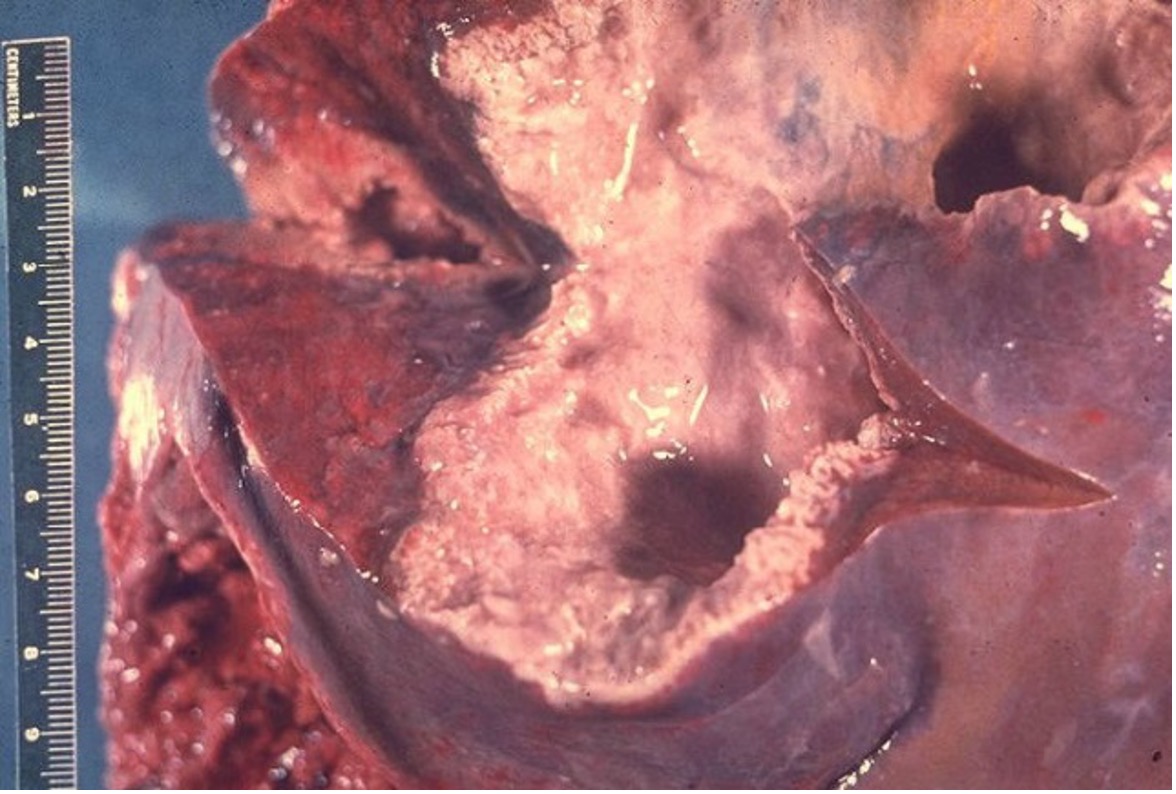
parasitology-case-study-ms-xiu-pathology-liver-image
Gross pathology of liver containing amoebic abscess.
entamoeba-histolytica-life-cycle-image
Life cycle. Image source: CDC.


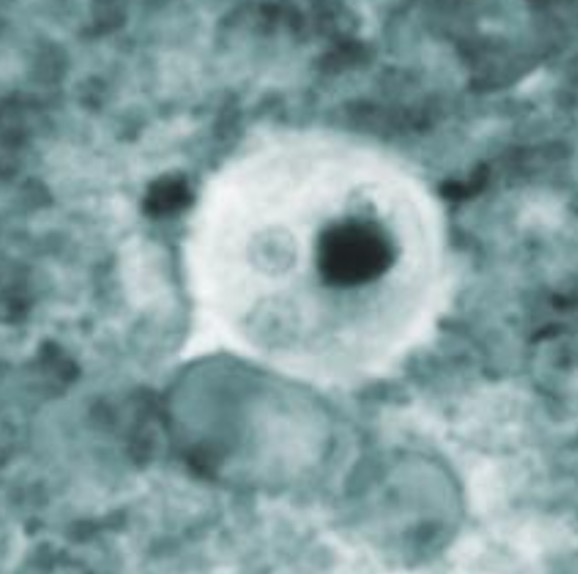
e-histolytica-cyst-image
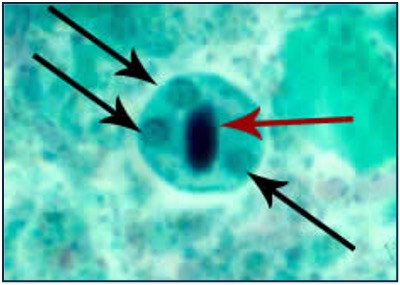
Cyst: Though mature E. histolytica cysts contain four nuclei, in this particular view, you are only able to see three nuclei, due in the focal plane presented, as well as a darkly stained chromatid body. Image source: CDC.


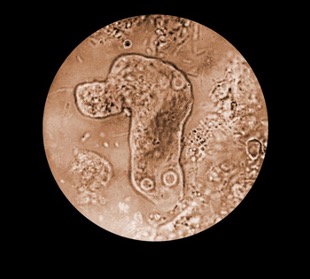
e-histolytica-trophozoite
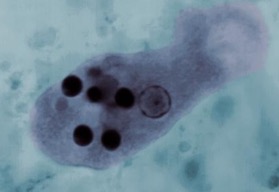
Trophozoite. Image source: CDC.
  • Cysts are the infectious form.
    • Note: Various non-pathogenic mimics: E. dispar, E. coli.
  • Dysentery:
    • O&P (trophozoites with ingested RBCs).
    • Stool Ag.
    • PCR.
    • Colonoscopy.
protozoa-e-histolytica-cyst
Adapted from RWJF Slides on Medically Important Protozoa. E. histolytica cysts, nuclei (black arrows) and chromatin bodies (red arrow).
liver-abcess-cyst-image
Image source: CDC.
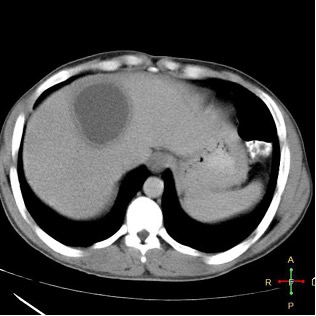
  • Liver abscess: Ultrasound or CT imaging plus serology (99% sensitive).
liver-abcess-ct-imaging
Image source: Radiopaedia. Invasive colitis is generally managed with metronidazole (alternative therapies include tinidazole, ornidazole, and nitazoxanide), followed by a luminal agent (such as paromomycin, diiodohydroxyquin (Iodoquinol), or diloxanide furoate) to eliminate intraluminal cysts. (Adapted from UpToDate 2/24/20—accessed by Sam Palpant.)

Metronidazole followed by paromomycin (or other GI intraluminal agent).

Test your knowledge

Anchovy paste—acellular proteinacous debris and brown-like fluid. Organisms are rarely seen but, when present, are trophozoites at edges of the abscess, invading nearby tissues.

Entamoeba histolytica.

Transmission is fecal-oral.

The prior episode of diarrhea was likely acute amebic dysentery, when she was first infected. Trophozoites travel across the lumen of the gut and through the bloodstream to portal blood supply where the liver abscess forms.

  • Diagnosis during the acute diarrheal stage is made by visualization of the organism on Stool O&P (x3 to increase yield), stool antigen testing, or stool PCR.
    • Organisms must be distinguished from non-pathogenic Entamoeba species.
      • The number of nuclei (4) can be helpful.
      • Pathognomonic findings of pathogenic E. histolytica would be visualizing ingested RBCs within the trophozoite.
      • Stool antigen and stool PCR, where available, distinguish between species.
    • Extraintestinal Amebiasis, like amebic liver abscess is typically made by the combination of imaging findings, risk profile, and serology for E. histolytica.
      • Stool testing is frequently negative.