


Parasitology 2: Mr. Moreno

Headshot of Joanna Breems, MD, FACP · Clinical Assistant Professor
Joanna Breems
MD, FACP · Clinical Assistant Professor
envelope icon phone icon

Case adapted from

Lier AJ, Tuan JJ, Davis MW, Paulson N, McManus D, Campbell S, Peaper DR, Topal JE. Case Report: Disseminated Strongyloidiasis in a Patient with Covid-19. Am J Trop Med Hyg. 2020 Oct;103(4):1590-1592. doi: 10.4269/ajtmh.20-0699.

Tap the arrows to view the case.
Mr. Moreno is a 68-year-old man who began to feel unwell, like he was coming down with the flu. He took his temperature in the evening and noted it was 101.3°F. He decided to get some rest and went to bed early. The next day, he awoke with worsening chills and rigors, and now he has a bad cough. By that evening, he was short of breath when walking to the bathroom, so he decided to go to the nearest ED.

He has a history of DM complicated by neuropathy, hypertension, and COPD. He quit smoking 4 years ago after a 30 pack-year history. He grew up in Ecuador but now resides in eastern Washington. He is retired from work in the timber industry in northern Idaho.
In the ER, he was found to have hypoxia, responsive to O2 by nasal cannula. A chest x-ray had bilateral patchy airspace opacities in the mid- to lower lung zones. SARS-CoV-2 was detected on a NP swab, and a sputum culture reported normal flora. While in the ER, his symptoms worsened, developing hypoxic respiratory failure.

He was admitted for treatment of severe COVID and started on Methylprednisolone and Tocilizumab (anti-IL6-receptor antibody).
After initial improvement, he developed new fevers and hypotension and persistent respiratory failure. Laboratory findings were notable for a leukocytosis (14) and absolute eosinophil count of 800/mL3. Blood cultures grew E.coli and Streptococcus anginosis, and a sputum culture had MSSA. He was treated for hospital-acquired infections, with limited response clinically.

Questions for consideration

Watch

Strongyloides stercoralis

Tropics, esp. children, where autoinfection is common.

  • Nematodes (roundworms) hookworm-like adults,  fecal-soil-skin transmission, plus lung migration and autoinfection
  • Closely related to Hookworm.
  • Skin penetration (not oral), with lung phase.
  • Parasite does not need to exit the body to complete life cycle—autoinfection.


strongyloides-stercoralis-life-cycle-graphic

  • Skin migration: Rash is common (“larva currens”).
  • Lung migration: Similar to Ascaris and hookworm.
  • GI upset: Abdominal pain or diarrhea.
  • May persist for years or decades via autoinfection.
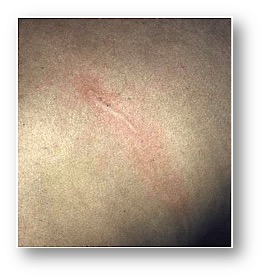
larva-currens-image
Larva Currens


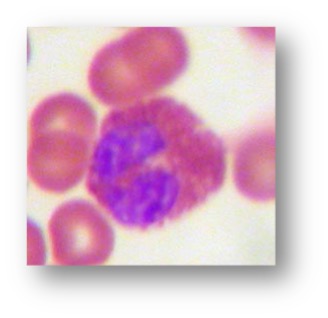
eosinophilia-image
Eosinophilia
  • Hyperinfection.
  • T-lymphocyte depletion (immunosuppression post-solid organ transplant, chemotherapy, steroids, or HIV).
    • Faster reproduction cycle.
    • Migration to ectopic sites.
    • Spread of fecal bacteria to sterile sites (blood, CNS, peritoneum, lungs . . .)
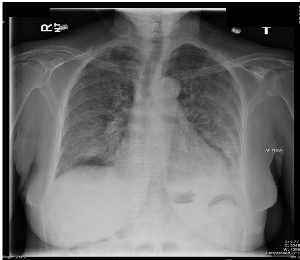
     

    strongyloides-stercoralis-late-infection-clinical-xray
    Strongyloides stercoralis late infection
  • Rash.
  • “Larva currens” on exam.
  • Eosinophilia common (but not always).
  • Look for larvae in stool (<50% sensitive), sputum culture (“tracks”),  or tissue.
  • Serology (ELISA IgG) if immunocompetent.
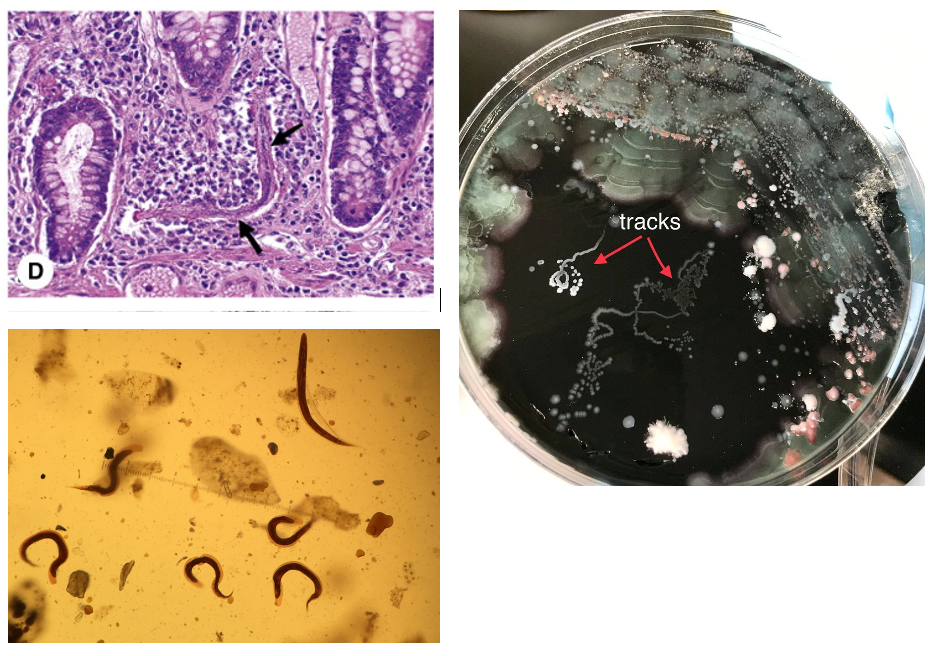
 

strongyloides-stercoralis-diagnosis-images
Bacterial growth plate with Strongyloides tracks and O&P iodine wet prep. Source: Rich Davis personal photos.

Ivermectin (treat before immunosuppression).

  • Improved sanitation.
  • Wear shoes.

AKA: “Strongy.”

Micro:

  • Nematodes (roundworms) hookworm-like adults.
  • Fecal-soil-skin transmission.
  • Lung migration and autoinfection.

Epidemiology: Tropics, (esp. children), autoinfection common.

Clinical:

  • Larva Currens.
  • Loeffler’s.
  • GI upset.
  • Hyperinfection.

Diagnosis:

  • Rash.
  • Eosinophilia.
  • Sputum or CSF for larvae.

Therapy: Ivermectin (treat before immunosuppression).

Prevention: Preemptive Rx. Improved sanitation, wear shoes.

Test your knowledge

Strongyloides is unique in that the mature adult worm in GI tract can produce eggs that develop into the infectious stage (rhabitiform larvae) all within the host GI lumen. The rhabitiform larvae then penetrate the colonic wall to access the blood stream. When many larvae are doing this, chances increase that bacteria from the colon can translocate to the bloodstream as well.

Most likely, this patient’s primary infection was years earlier in Ecuador, where the organism is endemic in the environment.

Hyperinfection is more common in the setting of immunosuppression; in this case, the glucocorticoids and IL-6 inhibition were contributing factors. All patients with severe Strongyloidiasis should also be screened for HIV and HTLV-1—both of these retroviruses impair specific cell-mediated immunity pathways essential in immune response to Strongyloides response.

  • Eosinophils play a key role in response to parasitic infections within tissues or blood—in particular, helminths are among the strongest stimulants for eosinophilia (i.e., protozoa characteristically do not elicit much eosinophilic response). The magnitude of eosinophilic response directly correlates with the degree of tissue invasion and/or migration through tissue of the parasite. Correspondingly, eosinophilia is most associated with the helminths that have invasive and migratory phases—Strongyloides, acute Hookworm (Ancylostoma and Necator), and acute Ascaris. For helminths that remain in the GI lumen or well-contained in tissues:
    • Tapeworms.
    • Adult ascaris.
    • Echinococcal cysts: Eosinophilia is usually absent.
  • Eosinophils are also exquisitely sensitive to steroids, which can interfere with diagnostic suspicion in Strongyloides hyperinfection, where steroids may be the inciting cause. In the setting of concurrent steroids, any amount of eosinophilia should be considered relevant.

The treatment of choice for Strongyloidiasis is Ivermectin.