


ECG physics
- An ECG is a recording of the heart’s electrical activity.
- Electrical current moving toward the positive electrode causes positive deflection.
- Electrical current moving away from the positive electrode causes negative deflection.
- The stronger the current, the stronger the deflection.
- All 12-lead ECGs are 10 second strips.
- The amplitude (vertical distance) of the deflection tells you the voltage (mV).
- Length (horizontal distance) is a function of time: Wider = the longer time period.
Reading the 12-Lead ECG
ECGs collected and scanned by Dr. Kevin Hodges.
12-lead interpretation algorithm
Emergent ECG?
Is it a STEMI?
Is there a serious rate problem?
Check each of these facets to inform your diagnosis.
Is there a serious rate problem?
Check each of these facets to inform your diagnosis.
Rate
Rhythm
(Pacemaker)
Ectopy
Intervals
Axis
Ischemia/
Infarct
Technique
Interpretation
Pull all of your investigations together to determine next steps.
Normal intervals
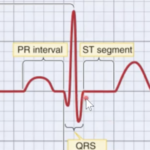
PR interval
- 120–200ms
QRS duration
- <100ms (normal)
- 100–120ms (borderline wide)
- >120ms (wide)
QTc
- <450ms (males)
- <470ms (females)
QRS segments
Q wavesPhysiologic
- < .04 sec (40ms)
Q wavesPathologic
- .04 sec (40 ms)
- or 1/3 the height of the R
- Q waves can occur normally in several leads. If normal, these Q waves are called physiologic Q waves.
- Physiologic Q waves normally do not exceed 30ms.
- Pathology (especially myocardial infarction) can place a Q wave in any lead.
- It is possible to examine the Q wave and, based upon its width, speculate whether it is pathologic or physiologic.
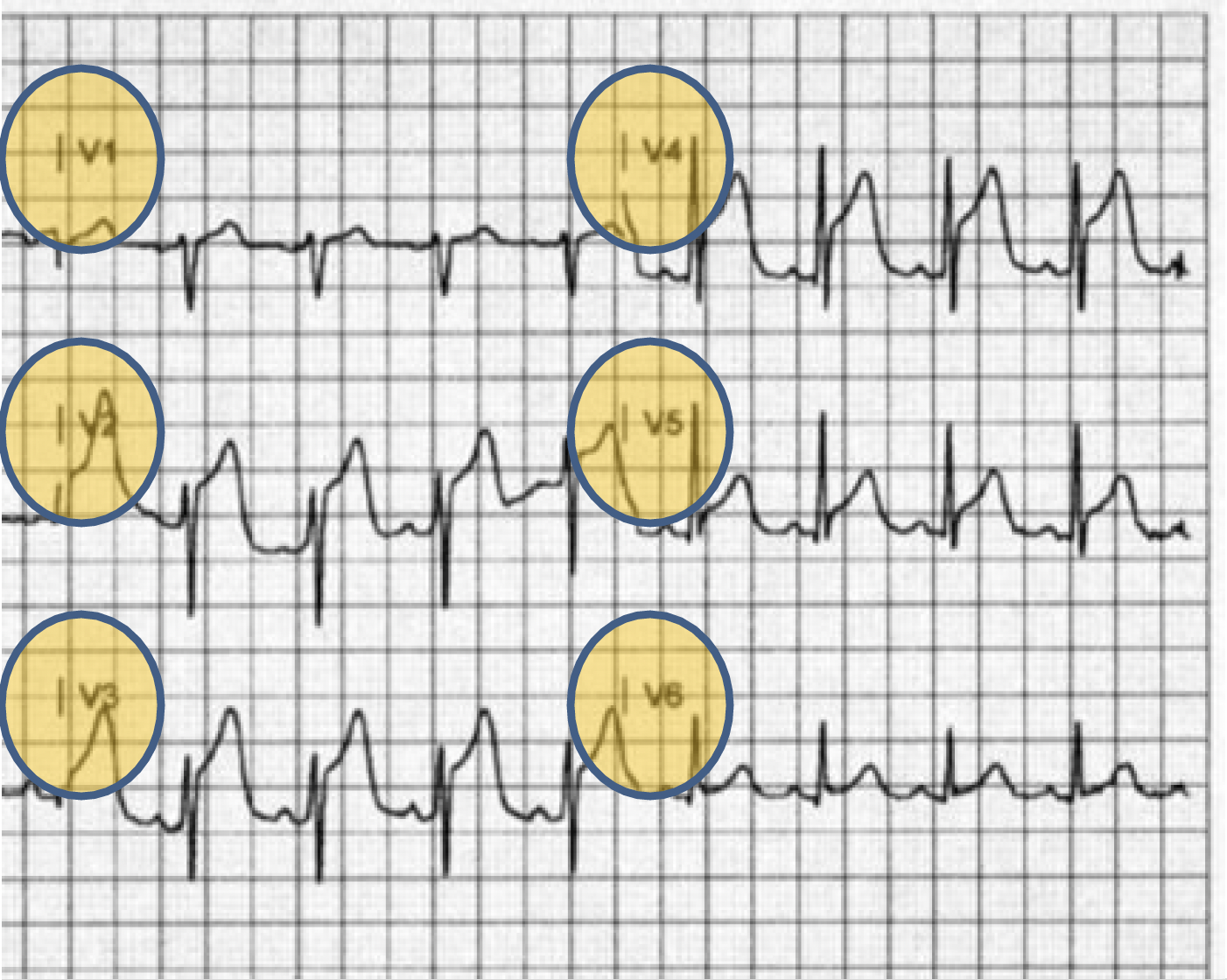
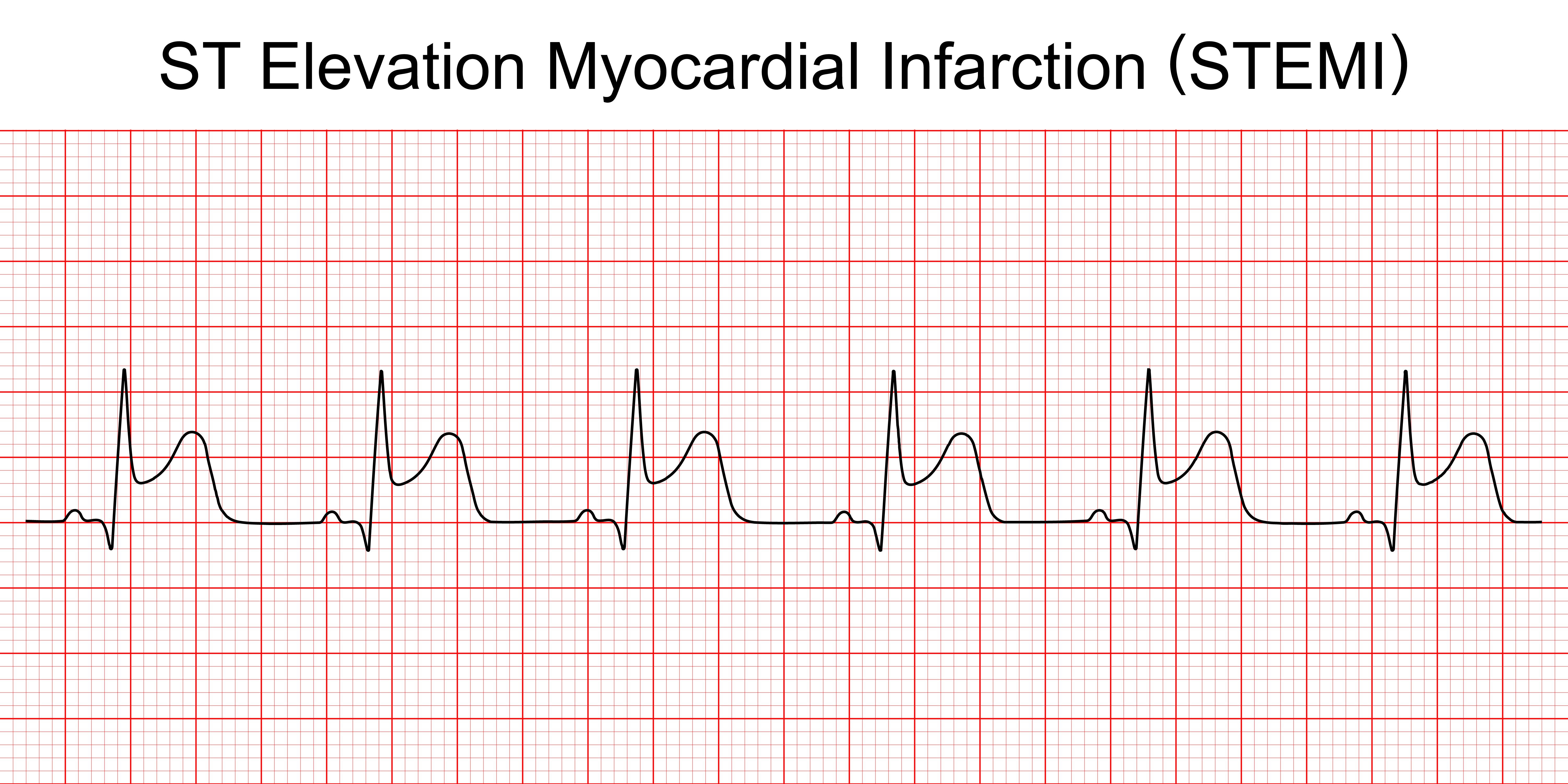
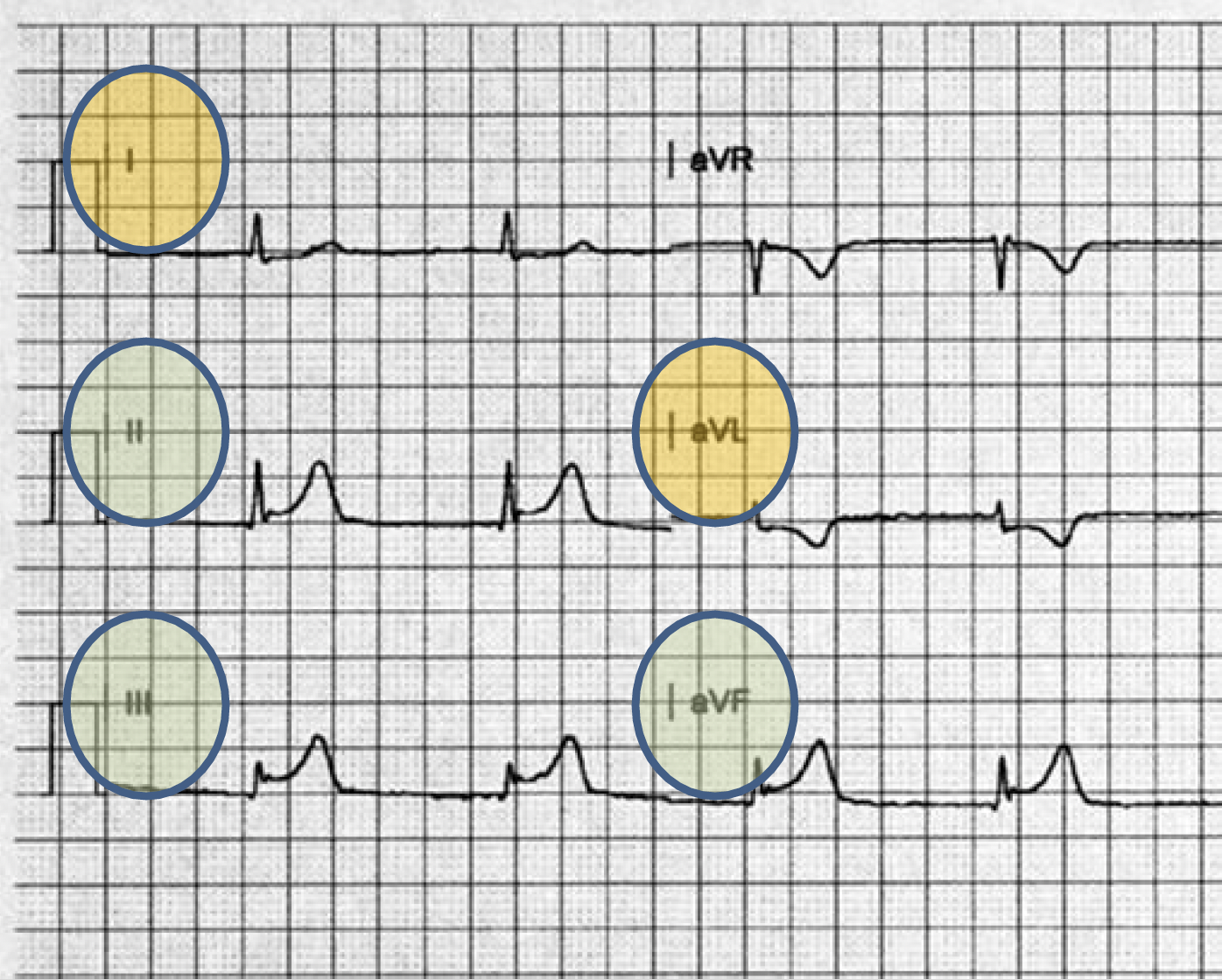
STEMI recognition
Keep learning
Take our fourth-year elective EKG Interpretation course—you can enjoy ECGs to your 's content!
Image credits
Unless otherwise noted, images are from Adobe Stock.