

Lab 25: Neck: Anterior Triangle of Neck
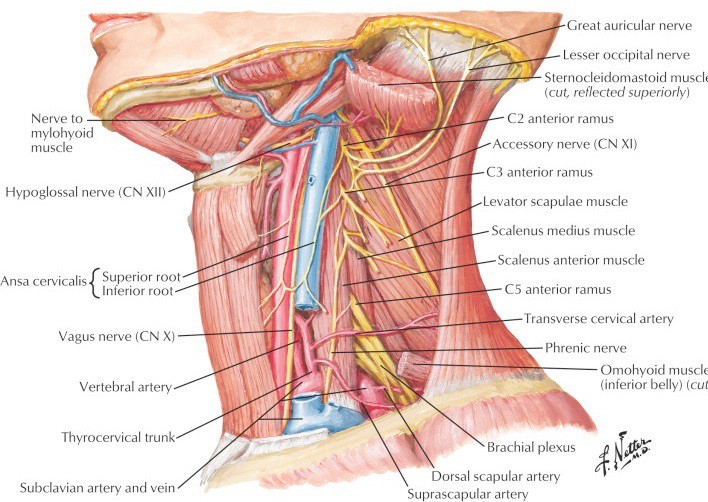
Download this lab as a PDF Goals Review the bony anatomy of the cervical vertebrae and the hyoid bone. Clean the muscles and landmarks that define the triangles of the neck. Dissect the contents of the anterior triangle focusing on these subtriangles: carotid, muscular, and submental. Study prosected specimens. Osteology of the Neck Cervical Vertebrae […]
Lab 23: Face, Parotid Gland, and Superficial Neck
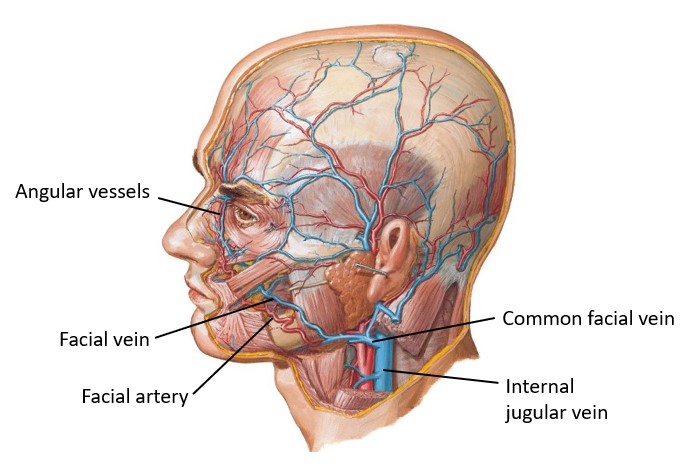
Download this lab as a PDF Goals Identify the bones associated with the face and parotid gland. Identify surface landmarks on the face. Clean and identify muscles of facial expression. Identify branches of the facial nerve on the face. Locate the major sensory nerves of the face. Identify the facial artery and vein. Identify the […]
Lab 22: Scalp, Cranial Cavity, and Meninges
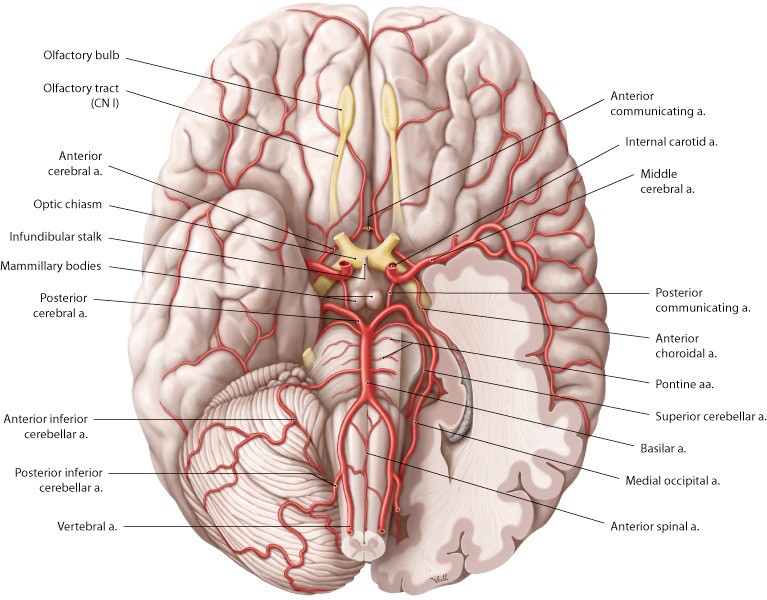
Download this lab as a PDF Goals Identify the layers of the SCALP. Examine the dura mater and the dural septae. Remove the brain and study: meningeal coverings, gross features, and arterial supply (circle of Willis). Examine the internal aspect of the base of the skull and the cranial fossae. Identify cranial nerves and blood […]
Lab 21, Station 5: Lungs, Pleura, Trachea, and Bronchi
Lab 21 navigation External Anatomy of the Lungs Apex and base Lobes Left lung = superior (upper) and inferior (lower) Right lung = superior (upper), middle, and inferior (lower) Surfaces = costal, mediastinal, and diaphragmatic Anterior and inferior borders In left lung: Cardiac notch and lingula Oblique fissure in both lungs; horizontal fissure in right lung […]
Lab 21, Station 4: The Larynx
Lab 21 navigation The larynx is the “voice box”—it is the organ of phonation (sound production). It also serves as a valve to regulate airflow to and from the lungs and as a sphincter to prevent foods and liquids from entering the airway. Skeleton of the Larynx Figure 20. Skeleton of the larynx. The “skeleton” […]
Lab 21, Station 3: The Pharynx
Lab 21 navigation The pharynx (“throat”) is the upper end of the alimentary canal. It is shared by the digestive and respiratory systems. See Figure 14 and 15. You will study the pharynx from two perspectives: in a mid-sagittal view on a cross-section and in a posterior view on a prosection. Figure 14. The pharynx. […]
Lab 21, Station 2: Skull Bones and Paranasal Sinuses
Lab 21 navigation The skull is divided into two parts: Neurocranium and Viscerocranium. Neurocranium (“brain case”) = Frontal bone, ethmoid, sphenoid, occipital bone, temporal bones (2), and parietal bones (2) The neurocranium has a roof called the calvaria (“skull cap”). Viscerocranium (“facial skeleton”) = Mandible, maxillae (2), zygomatic bones (2), nasal bones (2), lacrimal bones […]
Lab 21, Station 1: Nose and Nasal Cavities
Lab 21 navigation The nose has two parts: The external nose is on the face. It functions to direct air (and odors) into the nasal cavities. Identify these parts of the external nose on the face: Apex (“tip”) Root Dorsum (“bridge”) Alae Nares (“nostrils”) Figure 1. Parts of the external nose. The “skeleton” of the […]
Lab 21: Overview of the Upper and Lower Respiratory Tracts
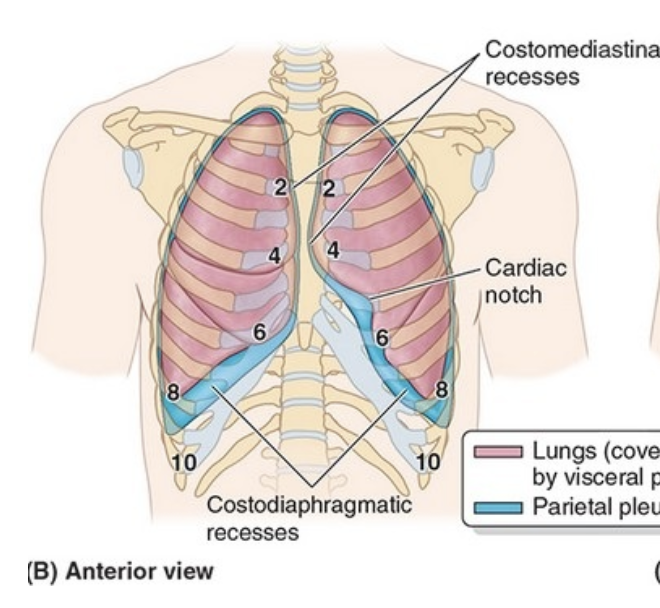
Students: Unlike most lab sessions, which are dissection-based, this session is a “prosection lab.” Assemble in 5 groups, each having ~16 members. There are 5 learning stations situated around the labs. Pick a station to start at. Groups will spend about 25 minutes at each station, rotating around the labs until they have visited all […]
Lab 20: Pericardium, Heart, and Mediastinum
Download this lab as a PDF Goals Review the parts of the pericardium and spaces of the pericardial cavity. Define the boundaries and subdivisions of the mediastinum. Clean and review the structures of the superior and posterior mediastinum. Review the blood supply and venous drainage of the posterior thoracic wall. Clean the epicardium of the […]